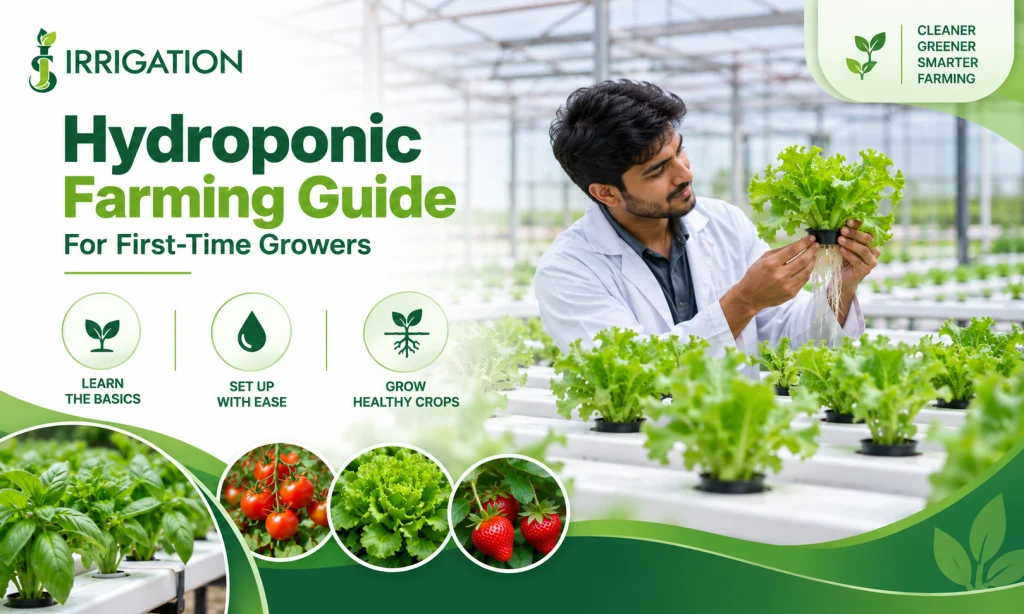
Hydroponic farming — growing crops without soil, using a nutrient-rich water solution instead — is one of the fastest-growing segments of protected cultivation in India. If you’re considering a hydroponic setup for the first time, here’s what you need to know before you start.
Why Growers Are Switching To Hydroponics
Hydroponic systems typically deliver faster growth cycles, higher planting density and significantly better water-use efficiency than soil-based farming — often using up to 90% less water for a comparable yield. Because the growing environment is controlled, hydroponics also reduces exposure to soil-borne diseases and pests.
The Structure Matters As Much As The System
A hydroponic setup still needs a properly engineered structure — usually a polyhouse or greenhouse — to protect the NFT (Nutrient Film Technique) channels, fertigation lines and growing trays from wind, rain and temperature extremes. Getting the structural design wrong is one of the most common (and expensive) mistakes first-time growers make.
What A Beginner Setup Typically Includes
- A climate-appropriate greenhouse or polyhouse shell
- NFT channels or grow trays suited to your chosen crop
- A fertigation/nutrient dosing system
- Basic monitoring for pH and EC (nutrient concentration)
Crops That Work Well For First-Time Hydroponic Growers
Leafy greens (lettuce, spinach), herbs and some fruiting vegetables like tomatoes and capsicum are common starting points because they have relatively forgiving nutrient and climate requirements compared to more sensitive crops.
Getting Started The Right Way
Jai Shri Irrigation designs and builds hydroponic-ready structures with provisions for NFT channels and fertigation lines built in from the start — so you’re not retrofitting a standard polyhouse later. If you’re planning your first hydroponic project, talk to our team about a structure sized correctly for your crop and budget.