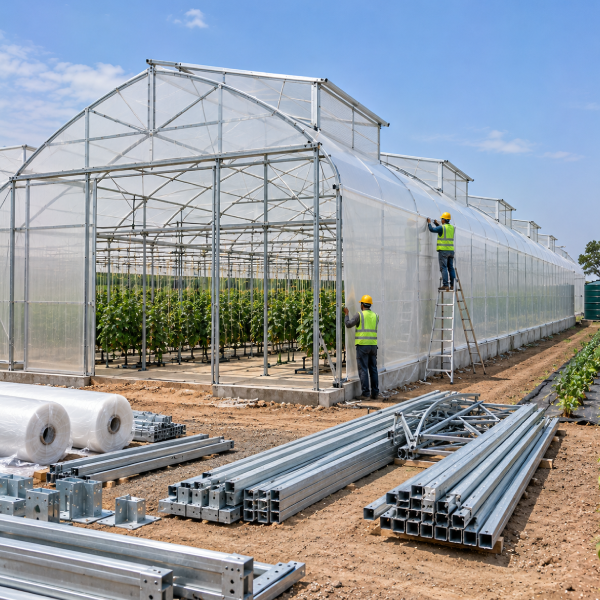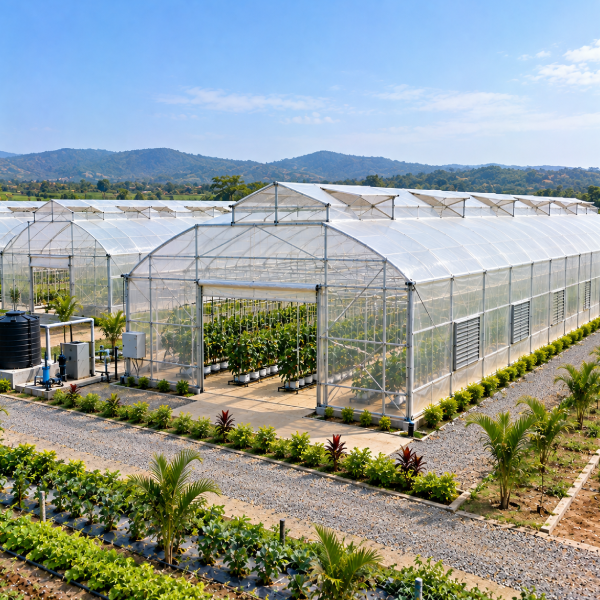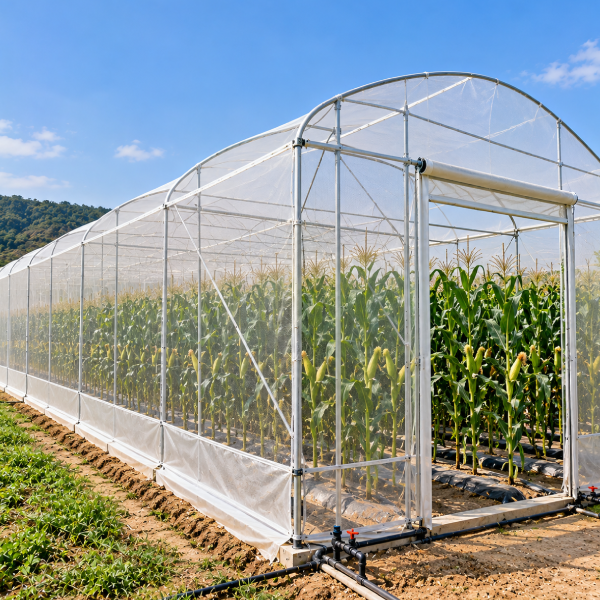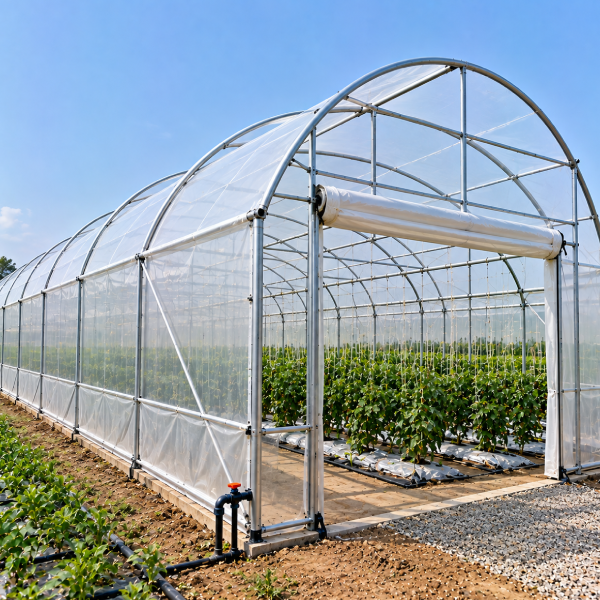
Round Tube Framing For Strength And Longevity
The tubular structure polyhouse uses round GI pipe sections rather than angular or box-section steel, distributing structural load evenly around the tube's circumference. This shape also sheds water more effectively and has no flat surfaces where corrosion typically starts first — a meaningful advantage over the working life of a structure exposed to monsoon rain and sun year-round.
The result is a frame that balances strength, weight and long-term corrosion resistance — a proven, widely-used structural approach across our polyhouse and greenhouse range. This is the same structural principle used in the majority of our fabricated frames, refined through 500+ installed projects since 2016.
- Round GI Tube Framing
- Even Load Distribution
- Corrosion-Resistant Profile
- Proven Structural Approach
Tubular Structure Polyhouse — At A Glance
Engineered around round GI tube framing for strength, corrosion resistance and even load distribution.
Built On A Proven Structural Profile
Every tubular structure polyhouse relies on the strength and durability of round GI pipe framing, refined through hundreds of installations across varied site conditions.
Round Tube Profile
Distributes structural load evenly around the tube's circumference for strength.
Better Water Shedding
Round surfaces shed rainwater more effectively than flat or angular profiles.
Corrosion-Resistant Design
No flat surfaces for water to pool on, reducing early corrosion points.
Hot-Dip Galvanized Coating
A protective zinc coating extends the frame's structural life significantly.
Consistent Wall Thickness Fabrication
Pipes are sourced and fabricated to consistent wall thickness specifications, ensuring uniform strength across the entire frame.
Weld-Free Bolted Connections
Tubular sections connect via bolted joints rather than on-site welding, improving connection reliability and enabling future disassembly if needed.
Why Choose Tubular Framing
A widely-proven structural approach that balances strength, weight and durability, backed by extensive real-world use across Rajasthan and PAN India.

Long Structural Life
Round tube profile and galvanized coating combine for extended service life.

Proven Approach
Round GI tube framing is a widely-used, well-understood structural method.

Strong Load Capacity
Even load distribution supports covering, wind and occasional snow loads reliably.

Balanced Material Cost
A practical strength-to-cost ratio compared to heavier structural alternatives.

Easier Future Modifications
Bolted tubular connections make it more straightforward to modify or expand a structure later compared to welded frame joints.
Lower Maintenance Frequency
The combination of round profile and hot-dip galvanizing means less frequent maintenance checks are needed compared to less corrosion-resistant framing approaches.
Suited To These Needs
A dependable structural choice across a wide range of polyhouse applications, from general agriculture to large commercial projects.
General Agricultural Use
A proven structural base suited to most standard polyhouse farming needs.
Wind & Rain-Exposed Sites
Round profile handles both wind and rain loads effectively.
Multi-Span Commercial Projects
A reliable structural approach scaled up for larger commercial layouts.
Long-Term Farm Investments
Growers prioritizing structural longevity in their protected cultivation investment.
Standard Commercial Poly Houses
The default structural approach for most of our poly house and net house range, suited to general commercial farming.
Structures Requiring Future Modification
Projects where the farmer anticipates needing to modify or reconfigure the structure as crop plans evolve.
Have A Question About This Structure?
Talk to our team directly — no forms, no waiting.
Call +91-76656 35358 Chat On WhatsAppRound GI Tube Framing & UV Film
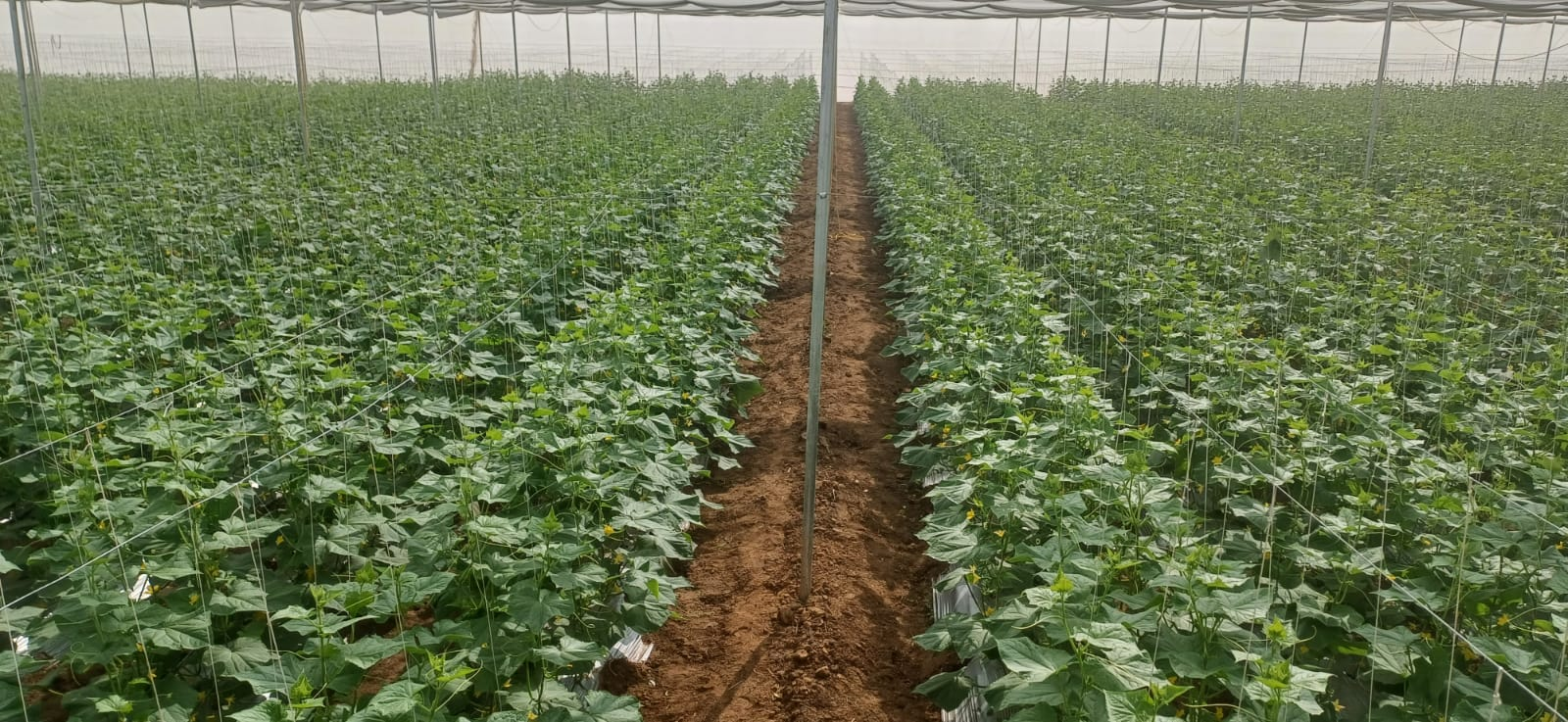
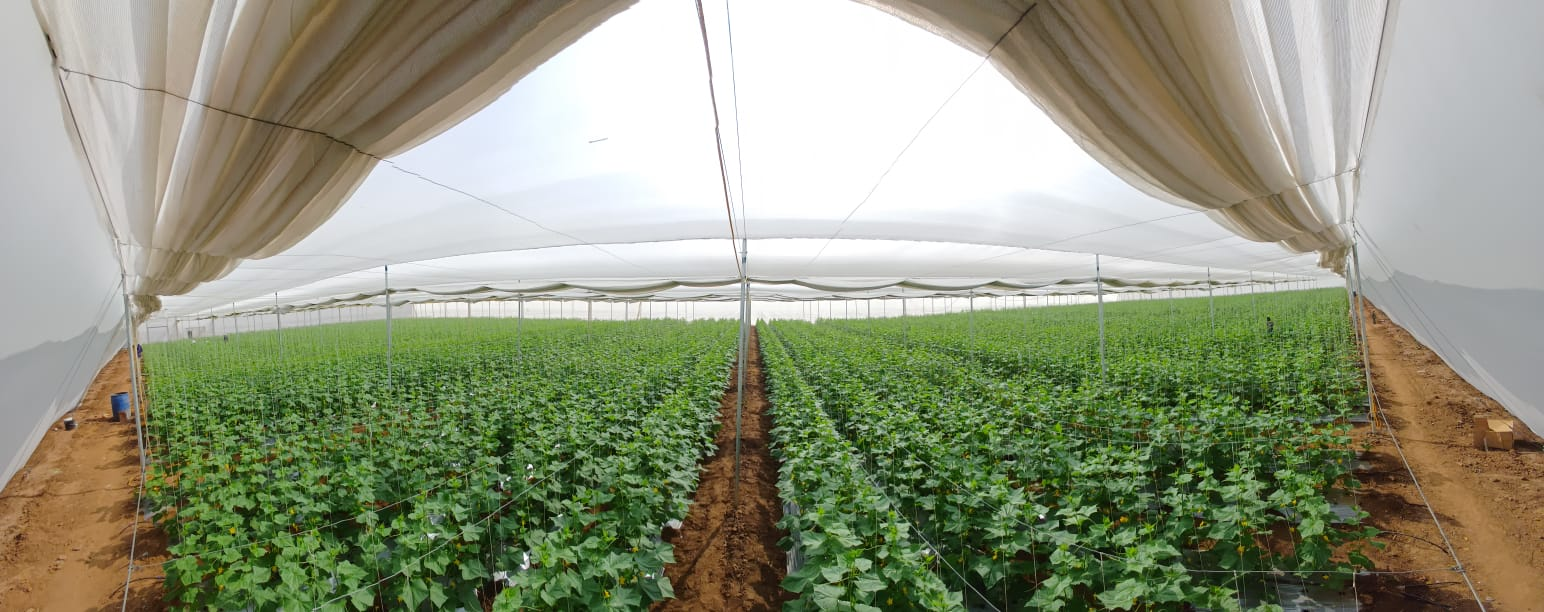
Built on round, hot-dip galvanized iron (GI) pipe framing — chosen for even load distribution and corrosion resistance — with 200 micron UV-stabilized polyethylene film covering.
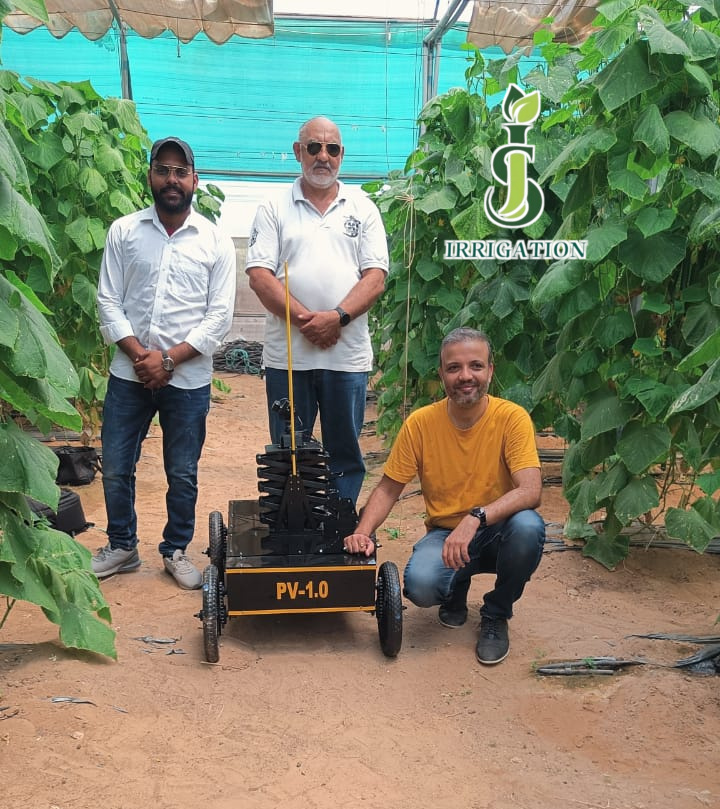
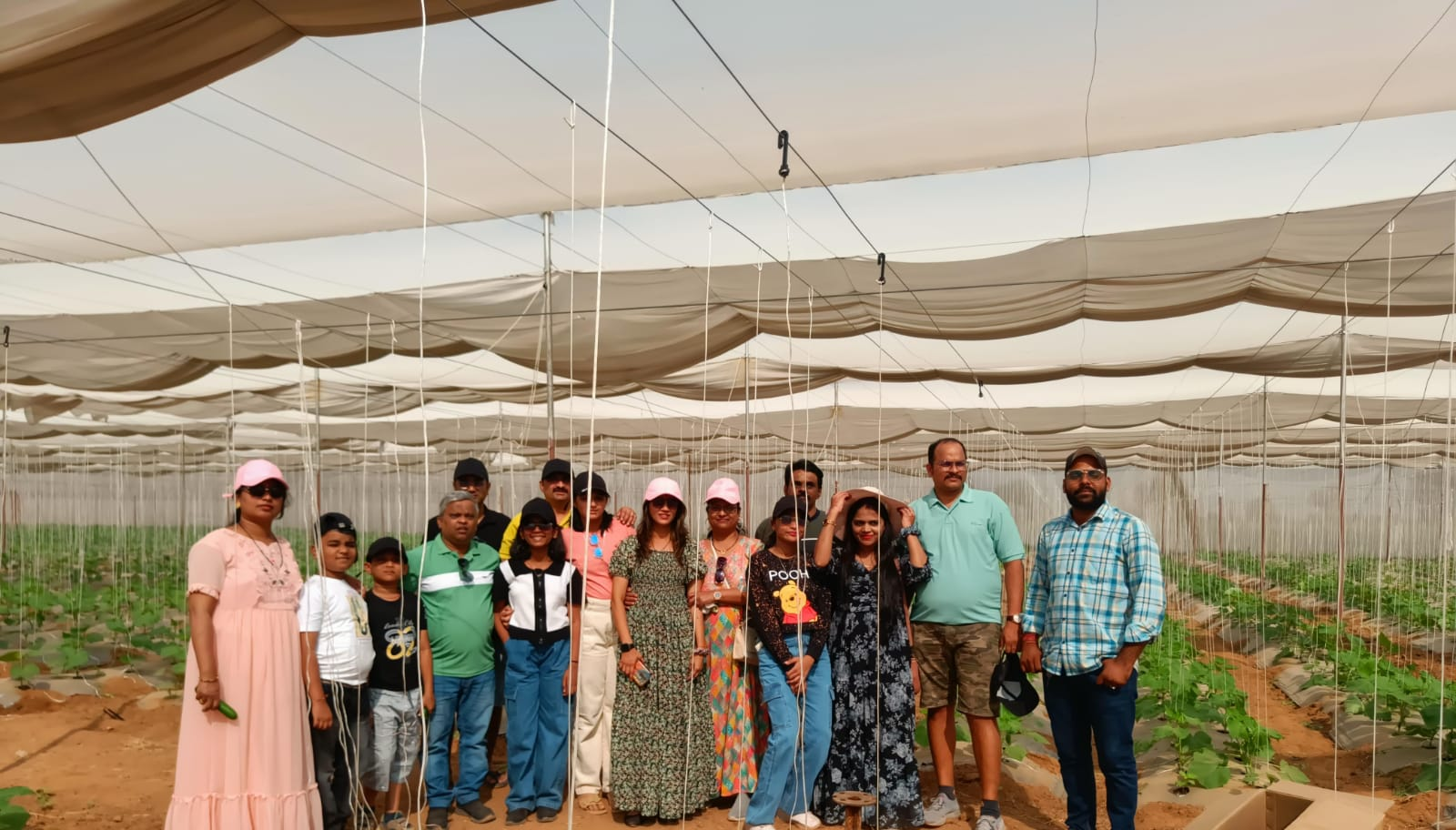
Tubular Structure Polyhouse — Real Installations
From Enquiry To Installation
A straightforward, five-step process from your first enquiry to a fully assembled structural frame.
Enquiry & Site Visit
Share your land size and structural requirement with our team. We schedule a free on-site visit to assess soil and layout.
Design & Quotation
Based on the site visit, we recommend a frame profile and span configuration, with a detailed engineering-backed quotation.
Fabrication
The frame is fabricated at our Sumerpur facility to the exact structural specification, ready for on-site assembly.
On-Site Assembly
Our team erects and bolts the frame on your prepared foundation, checking alignment across every span.
Handover & Support
We hand over the completed frame with structural documentation, and remain available for after-sales support.
Round tubes distribute structural load evenly around their circumference, shed water more effectively, and have no flat surfaces where corrosion typically starts first, compared to angular or box-section framing.
Round GI tube framing offers a strong, proven strength-to-weight ratio and is one of the most widely used structural approaches in polyhouse construction.
Cost depends on structure size and span configuration. Share your requirement for a free, customized quote.
Yes, we install tubular structure polyhouses PAN India, not just within Rajasthan.
Bolted connections offer more consistent quality than field welding, resist fatigue better over time, and allow for future disassembly or modification — welded joints are harder to inspect and modify after installation.
Pipe diameter is selected based on span width and structural load requirements during design — our team specifies this as part of your site-specific engineering.
The round profile handles wind load well by distributing pressure evenly around its circumference, without the stress concentration points that angular framing can develop.
Yes, round GI tube framing is our standard structural approach across poly houses, net houses and greenhouse structures, adapted in dimension and gauge to each specific product’s load requirements.
Have A Project In Mind?
Share your requirement and our team will get back to you within 24 hours with a free site consultation and a customized quote.
Send A Message
No obligation. Response within 24 hours.
More From Greenhouse Structures