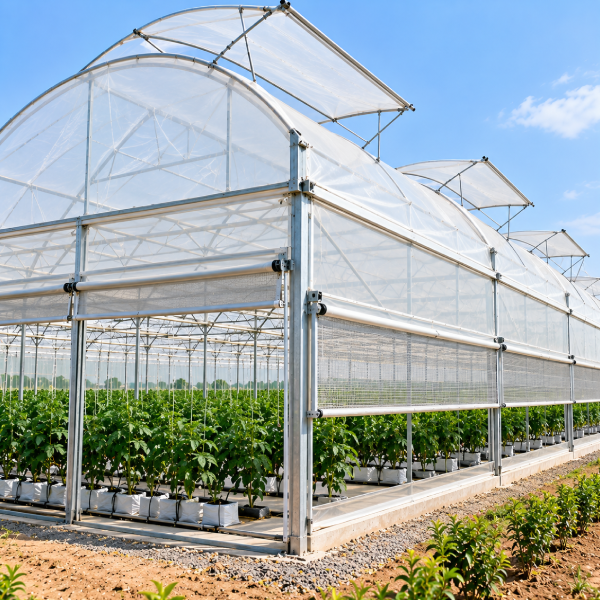
Passive Cooling, Lower Running Cost
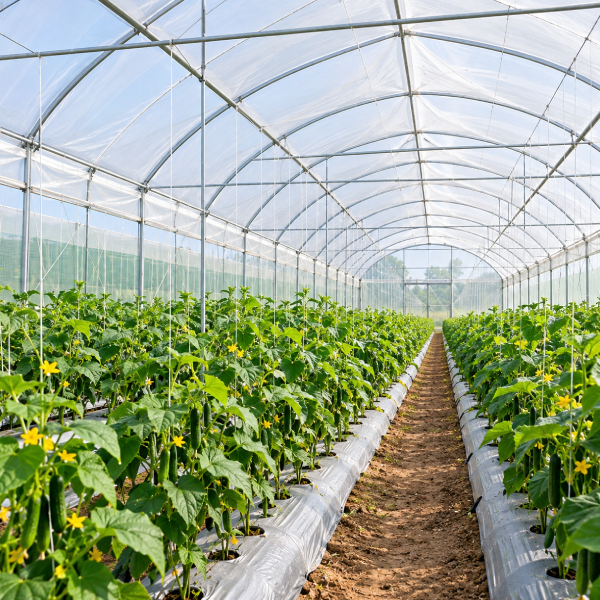
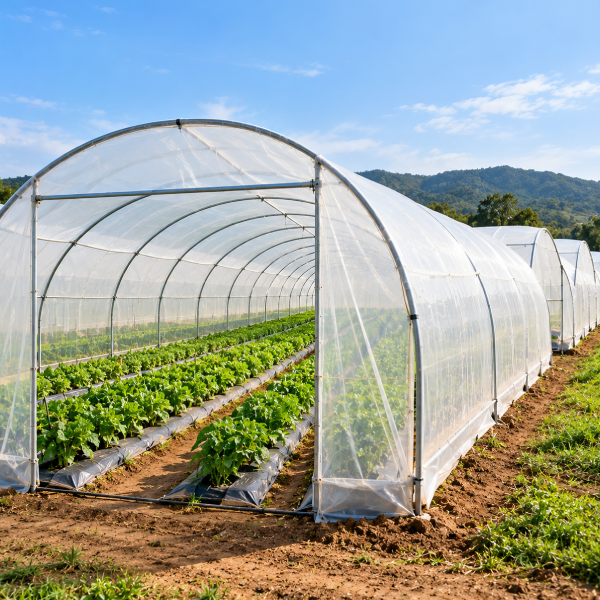
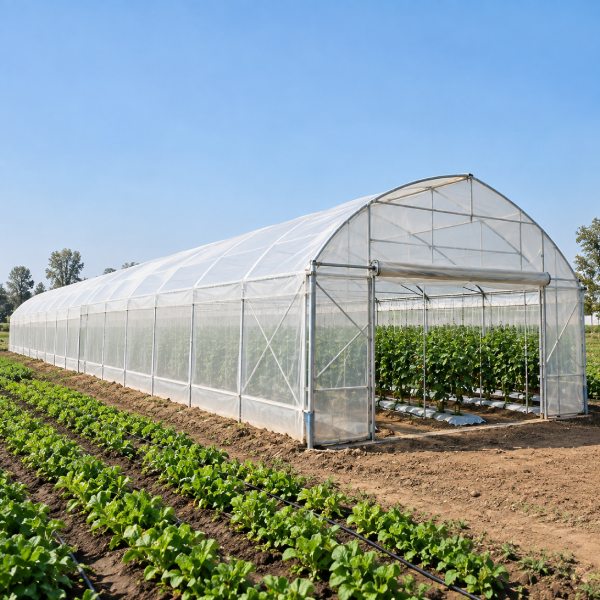
The naturally ventilated poly house uses side curtains and roof-level ventilation openings to create convective airflow — hot air rises and escapes through the ridge while cooler air is drawn in through the side curtains. This passive system needs no fans, pads or continuous electricity, making it one of the most affordable protected-cultivation structures to run over its lifetime.
Built on a hot-dip galvanized iron frame with UV-stabilized polyethylene film covering, this design suits farmers who want reliable crop protection from wind, rain, hail and moderate temperature swings, without the ongoing power cost of active cooling systems. It remains our most commonly recommended structure for farmers in Rajasthan's moderate-climate zones, where natural ventilation alone manages internal temperatures effectively for most of the year.
- Manually Or Motor-Operated Curtains
- Zero Electricity Cooling
- Lower Setup & Running Cost
- Suited To Moderate Climates
Naturally Ventilated Poly House — Structure At A Glance
Engineered around a hot-dip galvanized iron frame with side-curtain and ridge ventilation, sized to your plot and local wind-load conditions before fabrication begins.
Built For Simple, Reliable Ventilation
Every naturally ventilated poly house from Jai Shri Irrigation is engineered around passive airflow, so cooling never depends on electricity or moving parts.
Side Curtain Ventilation
Roll-up side curtains open and close to regulate airflow and temperature through the day.
Ridge Ventilation
Roof-level openings let hot air escape naturally, driven by convection rather than fans.
UV-Stabilized Film
200 micron polyethylene film blocks harmful UV rays while diffusing sunlight evenly.
GI Pipe Frame
Hot-dip galvanized iron frame resists corrosion and carries structural loads for 15+ years.
Adjustable Curtain Height
Side curtains can be partially or fully raised, giving fine control over airflow rather than an all-or-nothing ventilation approach.
Low Maintenance Ventilation System
With no fans, motors or pads, there are fewer mechanical parts to service or replace over the structure's working life.
Why Farmers Choose Natural Ventilation
A lower-cost entry point into protected cultivation, without sacrificing crop protection.

Lower Running Cost
No electricity bills for cooling — curtains and ridge vents do the work passively.

Weather Protection
Shields crops from wind, hail, heavy rain and pest pressure year-round.

Extended Growing Season
Grow off-season crops and nursery plants beyond the limits of open-field farming.

Faster Payback
Lower setup and running costs mean a quicker return on investment than active-cooled structures.

Zero Dependency On Power Supply
Since cooling is entirely passive, the structure operates reliably even in areas with inconsistent electricity access.

Proven In Rajasthan's Climate
This design has been refined across hundreds of installations in Rajasthan's specific climate conditions since 2016.
Suited To These Growing Needs
A versatile structure for farmers who want reliable protected cultivation without active climate control.
Vegetable Cultivation
Tomato, capsicum, cucumber and other vegetables benefit from consistent, protected growing conditions.
Nursery & Seedling Raising
A controlled environment for raising healthy seedlings before transplanting to open fields.
Off-Season Farming
Extend your growing calendar beyond what open-field conditions allow.
Moderate-Climate Regions
Best suited to regions where passive ventilation alone can manage internal temperatures.
First-Time Protected Cultivation Projects
An accessible, lower-maintenance entry point for farmers new to poly house farming.
Off-Grid & Remote Farm Sites
Locations without reliable electricity access, where passive ventilation is a practical necessity rather than just a cost preference.
Have A Question About This Structure?
Talk to our team directly — no forms, no waiting.
Call +91-76656 35358 Chat On WhatsAppGI Frame & UV-Stabilized Film
The structural frame uses hot-dip galvanized iron (GI) pipes, resistant to rust and corrosion for a long service life. The covering is 200 micron UV-stabilized polyethylene film, engineered to diffuse sunlight evenly while blocking harmful UV rays that would otherwise degrade both the film and the crop.
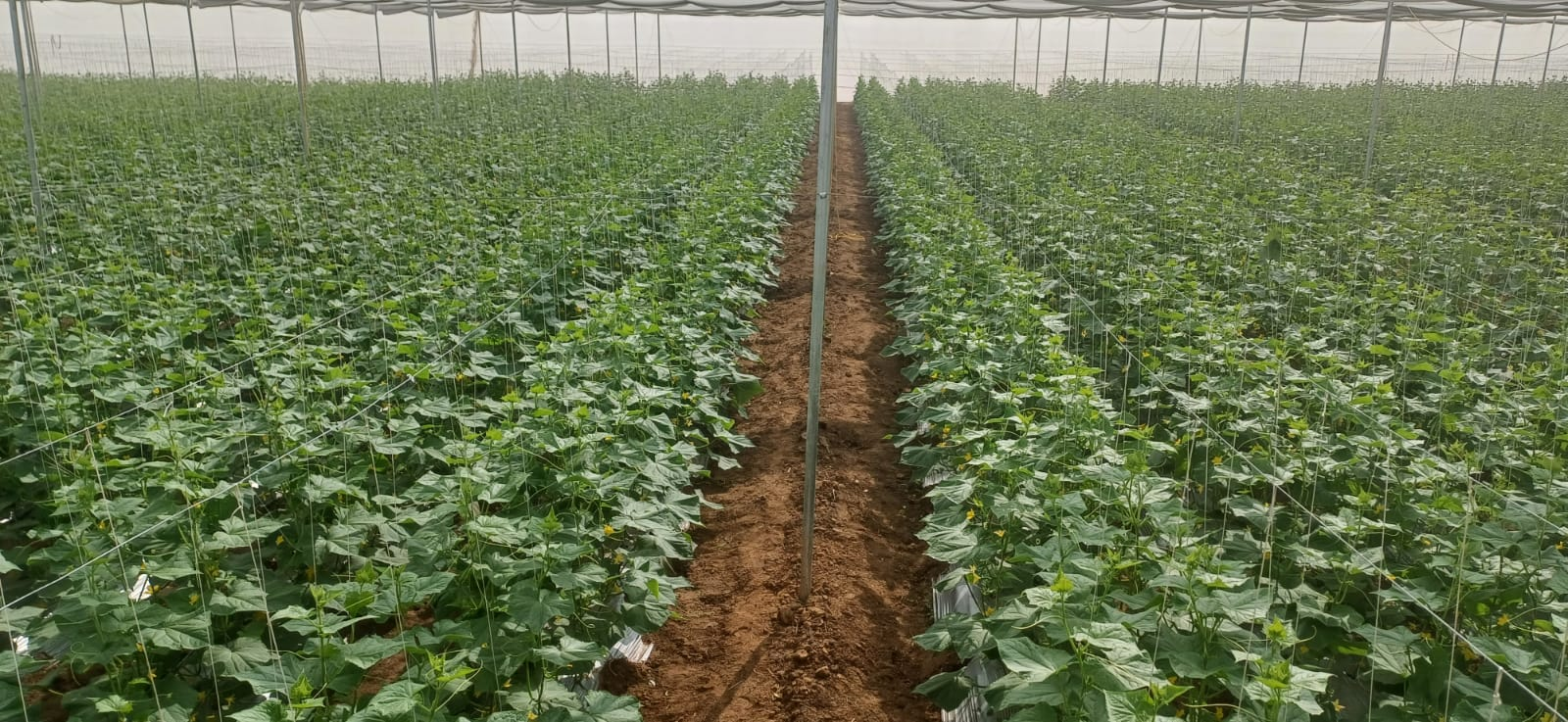
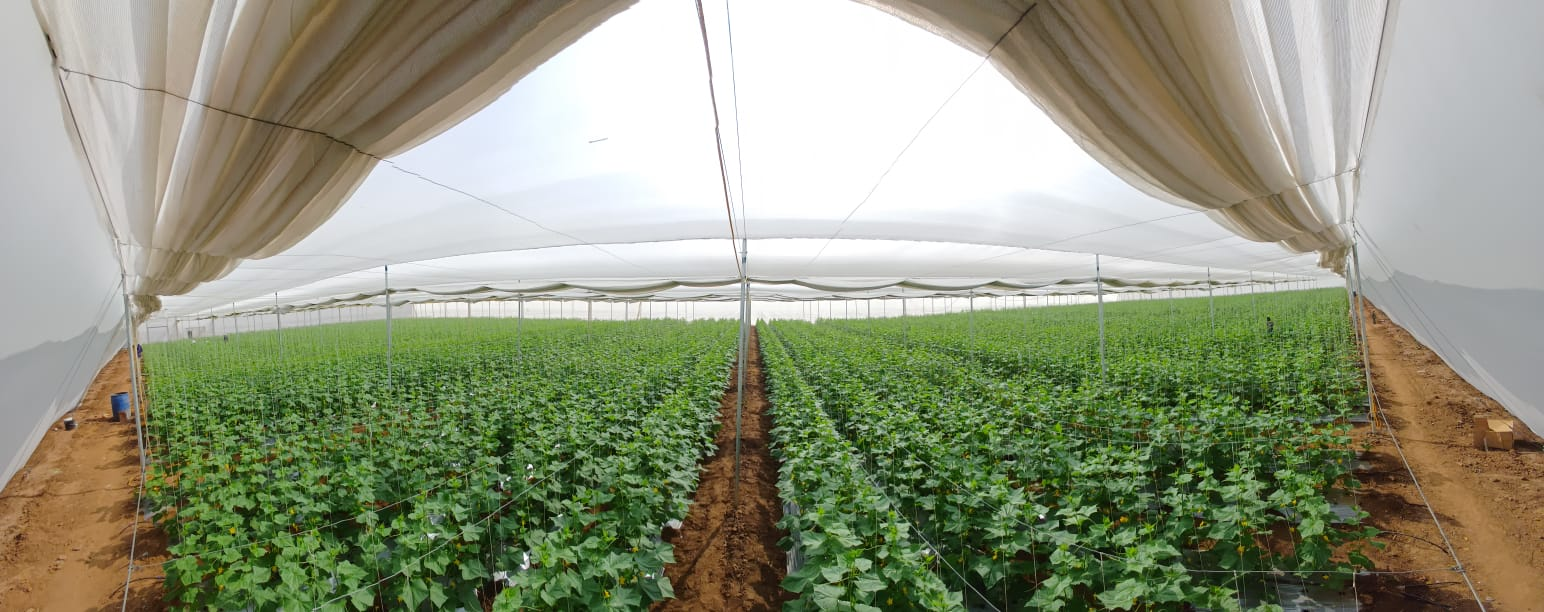
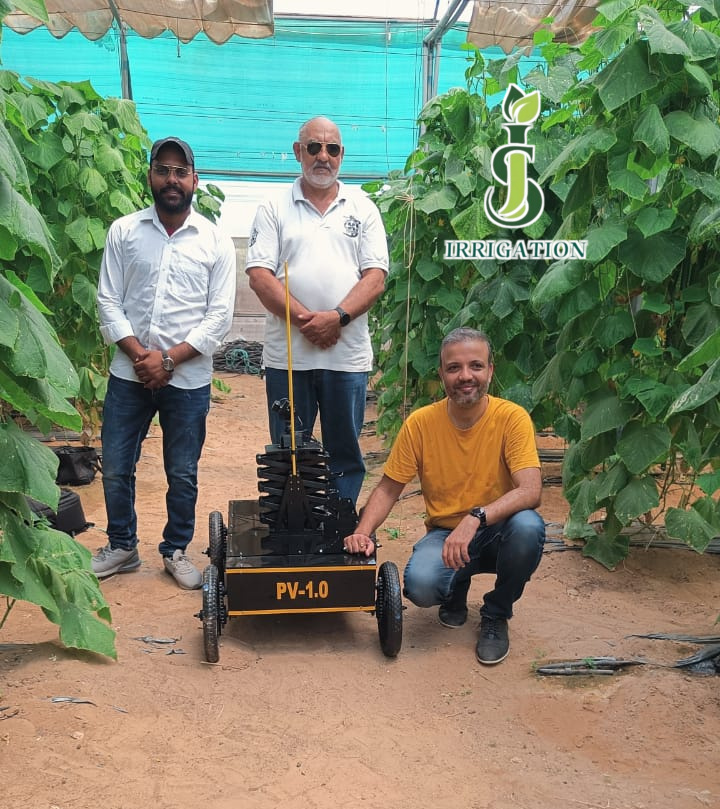
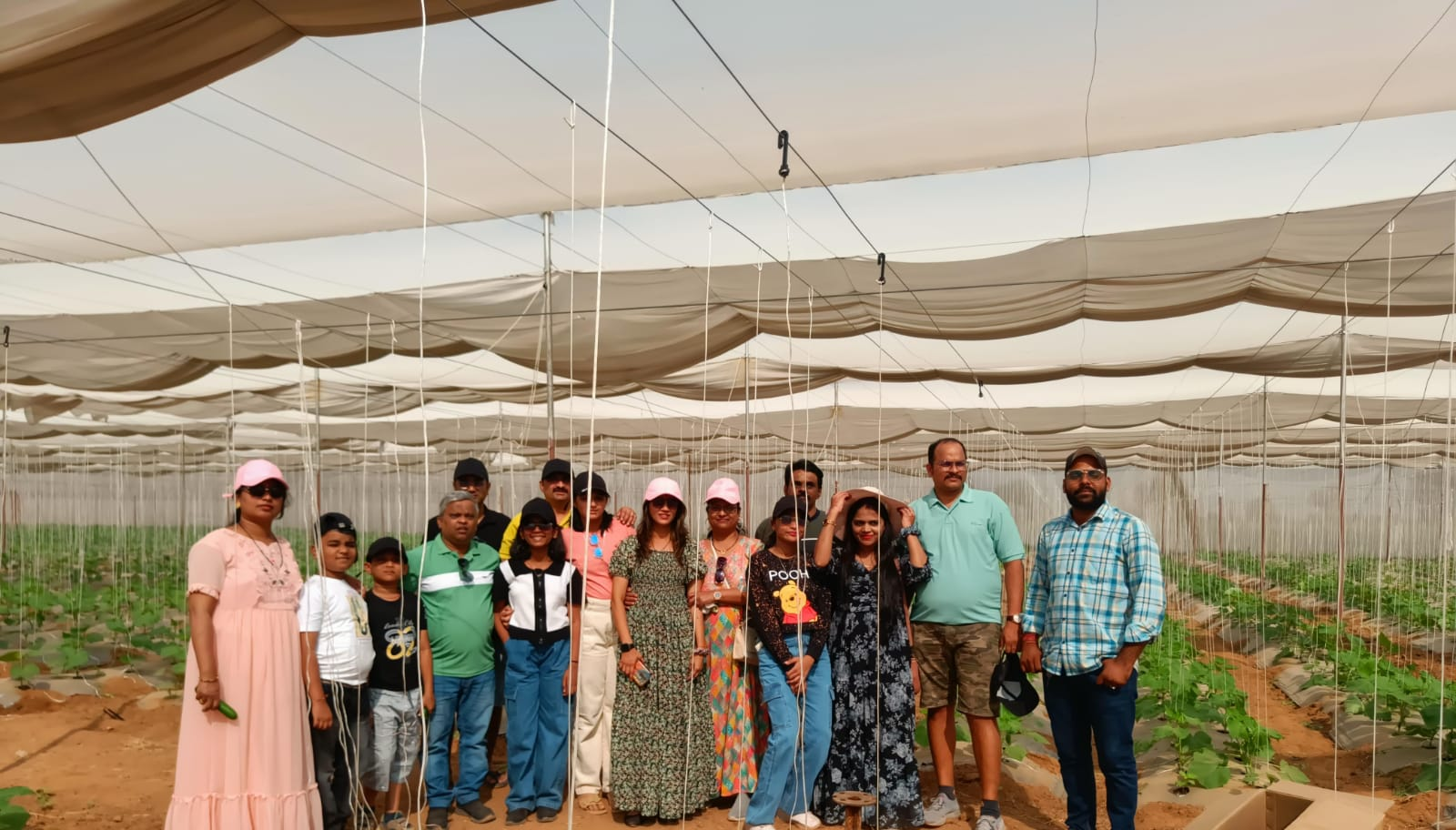
Naturally Ventilated Poly House — Real Installations
From Enquiry To Installation
A straightforward, five-step process from your first enquiry to a fully installed, farm-ready polyhouse structure.
Enquiry & Site Visit
Share your land size and crop plan with our team. We schedule a free on-site visit to assess soil, sunlight and wind exposure.
Design & Quotation
Based on the site visit, we recommend a structure size and layout, and share a detailed quotation with material specifications.
Fabrication
GI pipes are cut, galvanized and fabricated at our facility in Sumerpur to the exact structure dimensions.
On-Site Installation
Our installation team erects the frame, fits the UV-stabilized film and curtains, and completes the foundation work on your site.
Handover & Support
We walk you through operation and maintenance, and remain available for after-sales support and film replacement.
Side curtains and ridge-level vents create convective airflow — hot air rises and escapes through the ridge while cooler air is drawn in through the curtains, keeping the structure cool without any electrical cooling system.
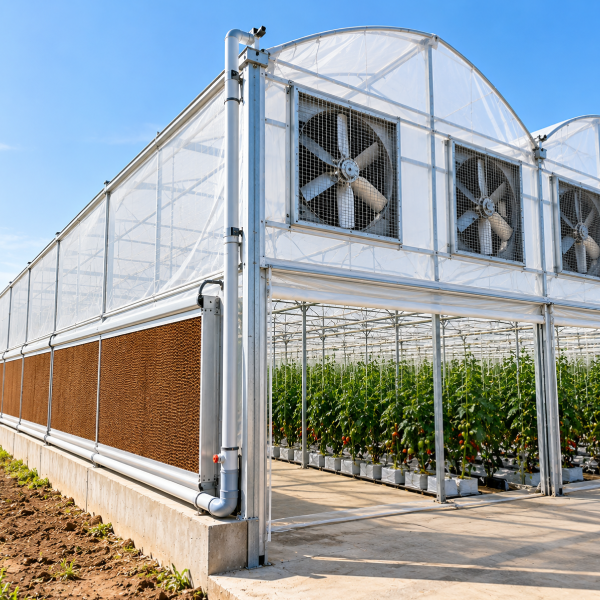
It works well in moderate climates. For very hot regions or heat-sensitive crops, a fan & pad controlled poly house with active cooling may be a better fit — our team can advise based on your location.
Cost depends on structure size, span width and site conditions. Since there’s no cooling system to install, it’s typically more affordable than a fan & pad controlled structure of the same size. Share your requirement for a free quote.
Yes, side curtains can be fitted with a motorized system for automatic opening and closing, or operated manually with a hand crank — we recommend based on your budget and structure size.
Vegetables like tomato, capsicum and cucumber, nursery and seedling crops, and most off-season produce grow well in this structure.
Most standard naturally ventilated poly houses are completed within 3-5 weeks from site survey to handover, depending on size and site accessibility.
Yes, several central and state schemes offer subsidies on poly house construction. Our team can guide you through eligibility for your region.
Yes, we install naturally ventilated poly houses PAN India, not just within Rajasthan.
Yes, curtains can be raised or lowered as needed to respond to changing temperature and wind conditions throughout the day, whether operated manually or with a motorized system.
Yes, since the system has no dependency on electricity, natural ventilation continues to function normally regardless of power availability — an advantage in areas with inconsistent supply.
These are calculated based on your specific span width, local climate data and crop requirements during the design stage, not applied as a fixed standard specification.
Periodic checks on curtain tracks, cords or motors (if motorized) are the main maintenance requirement — considerably less than the upkeep active cooling systems need.
Have A Project In Mind?
Share your requirement and our team will get back to you within 24 hours with a free site consultation and a customized quote.
Send A Message
No obligation. Response within 24 hours.
More From Poly House