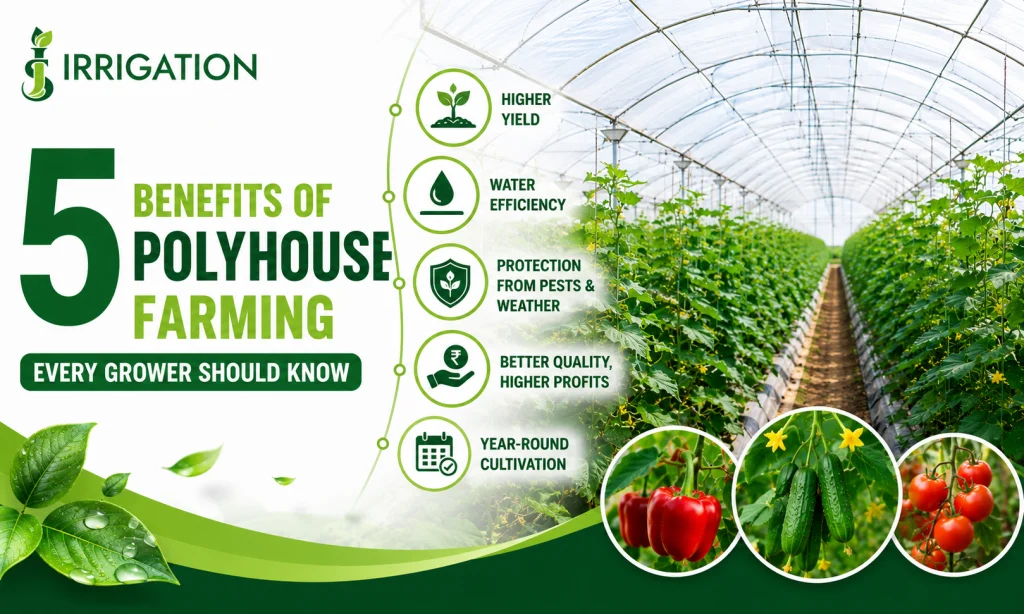
Protected cultivation is changing the way Indian farmers grow crops, and polyhouse farming sits right at the centre of that shift. A polyhouse — sometimes called a greenhouse or poly house — is a structure covered with UV-stabilized polyethylene film that lets a farmer control temperature, humidity and light instead of leaving a crop entirely at the mercy of the weather. At Jai Shri Irrigation, we have manufactured and installed polyhouses across Rajasthan and PAN India since 2016, and we consistently see the same five benefits show up for growers who make the move.
1. Higher, More Predictable Yield
Inside a polyhouse, temperature and humidity stay within the range a crop actually needs, instead of swinging with the outside weather. That consistency alone typically pushes yield well above open-field results for the same plot size — often 2-4 times higher depending on the crop and structure type.
2. Year-Round, Off-Season Cultivation
Because a polyhouse insulates the crop from frost, excess heat and monsoon damage, farmers can grow vegetables, flowers and nursery crops outside their natural season. Off-season produce also tends to fetch a better market price, which improves overall returns from the same land.
3. Lower Water Usage
A polyhouse structure dramatically reduces evaporation compared to open-field irrigation. Paired with drip irrigation — which most of our polyhouse builds are designed to support — water consumption can drop by 30-50% for the same or better yield.
4. Better Pest & Disease Control
A sealed or net-protected structure keeps out many common pests and airborne diseases that would otherwise require heavy pesticide use in open fields. That means fewer chemical inputs, lower cost, and produce that is easier to market as low-residue or export-quality.
5. Long-Term Return On Investment
A well-engineered polyhouse — built with a hot-dip galvanized iron frame and UV-stabilized film — is a long-term structural asset, not a seasonal expense. With proper maintenance, the frame lasts for years, while the film is typically replaced only once every 3-5 years.
Choosing The Right Polyhouse Manufacturer
The benefits above only hold up if the structure itself is engineered correctly for your plot, crop plan and local wind conditions. That is why site survey and custom structural design matter as much as the film and frame quality. If you are evaluating polyhouse construction in Rajasthan or anywhere in India, talk to our team for a free site consultation and a customized quote.