The Best Of Net House And Poly House
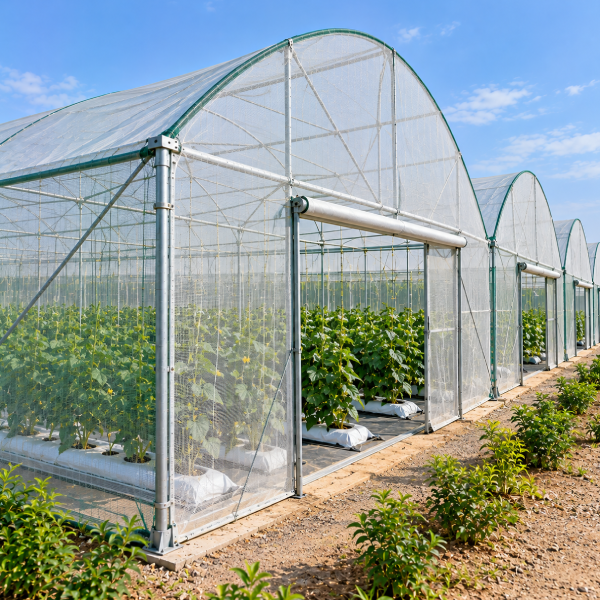
The net poly house combines two covering materials in one structure: insect-proof netting on the side walls for pest exclusion and continuous airflow, and UV-stabilized film on the roof for rain and weather protection overhead. This hybrid approach gives you the ventilation benefits of a net house with the rain protection of a poly house, in a single integrated design.
This hybrid approach suits crops that benefit from open-air side ventilation but still need reliable protection from monsoon rainfall and hail, without the cost of full film covering on all sides. It's a popular choice for farmers in regions with a distinct monsoon season who want season-round protected cultivation without over-investing in unnecessary side covering.
- Netting On Side Walls
- Film Covering On Roof
- Rain & Pest Protection Combined
- Balanced Cost Structure
Net Poly Houses — At A Glance
A hybrid GI-frame structure combining insect netting on the sides and UV film on the roof.
Two Materials, Each Doing What It Does Best
Every net poly house is engineered to combine ventilation and rain protection in one structure, using netting where airflow matters most and film where rain protection matters most.
Open-Air Side Ventilation
Netted side walls keep the growing area breathable and pest-free.
Rain-Proof Roof
UV film covering the roof keeps monsoon rain and hail off your crop.
GI Pipe Frame
A single frame supports both covering materials for a clean, integrated structure.
Cost-Balanced Design
Netting sides cost less than film, keeping overall material cost balanced.
Transition Detailing At Roof-Wall Junction
The junction between film roof and netted walls is engineered to prevent water ingress at the transition point, a common failure point in poorly-designed hybrids.
Independent Covering Replacement
Roof film and side netting are fitted independently, so each can be replaced on its own service schedule without disturbing the other.
Why Choose A Hybrid Net Poly House
Get airflow and pest protection where you need it, rain protection where you need that too — a genuinely hybrid approach to protected cultivation.

Dual Protection
Pest exclusion and rain protection combined in a single structure.
Better Airflow Than Full Film
Netted sides keep the structure cooler than a fully film-covered poly house.
Cost-Efficient Hybrid
Netting on the sides costs less than covering the whole structure in film.

Reliable Monsoon Protection
The film roof keeps crops protected through heavy seasonal rainfall.
Balanced Year-Round Performance
Performs well across both dry season (open ventilation) and monsoon season (rain protection) without needing seasonal modification.

Moderate Investment, Broad Protection
Positioned between a net house and full poly house in cost, while covering a wider range of weather conditions than either alone.
Suited To These Growing Needs
Best suited to crops needing pest protection and airflow, with reliable overhead rain cover, especially through the monsoon season.
Monsoon-Season Vegetable Crops
Crops grown through the rainy season that still need pest exclusion.
Nursery Production
Seedlings that benefit from airflow at the sides and rain protection overhead.
Mixed-Season Farming
Farms cultivating across both dry and monsoon seasons with one structure.
Budget-Conscious Full Protection
Growers wanting fuller protection than a net house without full poly house cost.
Monsoon-Season Nurseries
Nursery operations that need to continue production through heavy seasonal rainfall without full poly house investment.
Multi-Season Commercial Vegetable Farms
Farms growing across both dry and wet seasons that want one structure suited to both conditions.
Have A Question About This Structure?
Talk to our team directly — no forms, no waiting.
Call +91-76656 35358 Chat On WhatsAppGI Frame With Combined Net & Film Covering
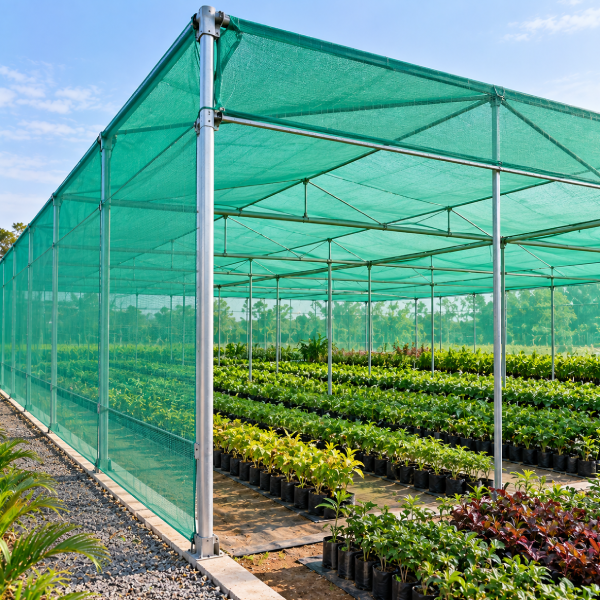
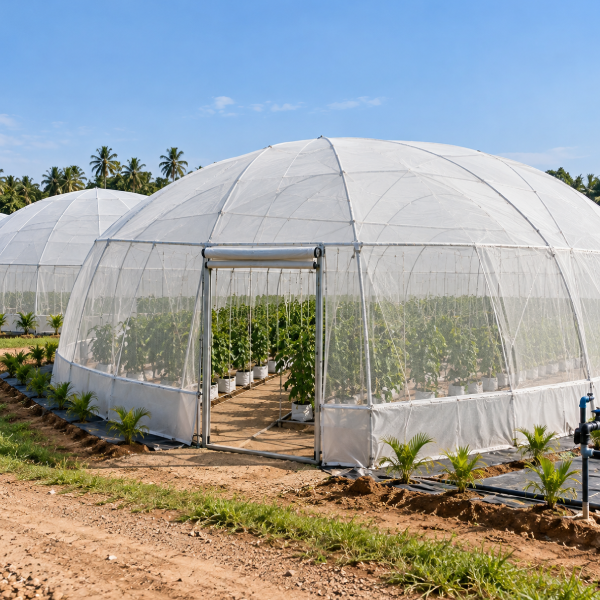
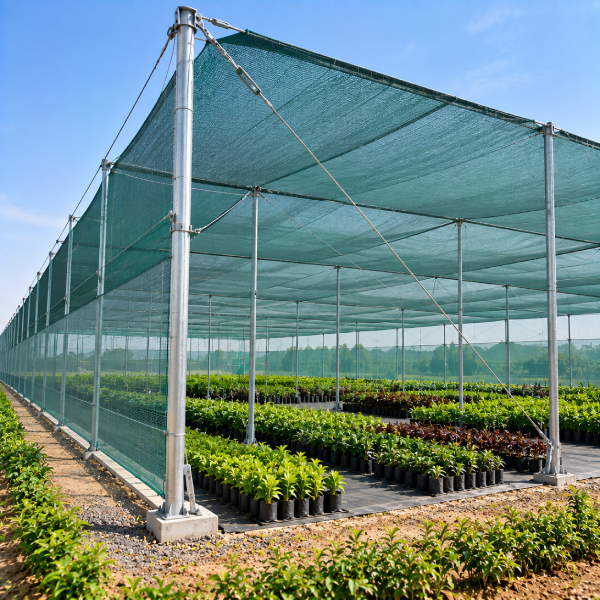
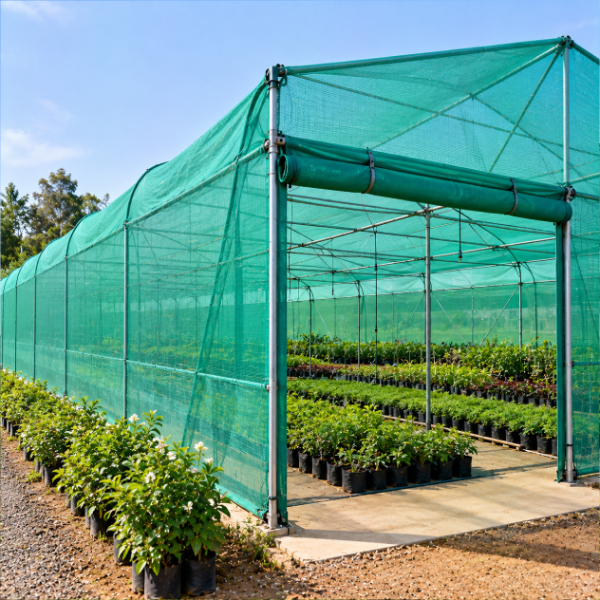
Built on a hot-dip galvanized iron (GI) pipe frame, with UV-stabilized insect-proof netting on the side walls and UV-stabilized polyethylene film on the roof.
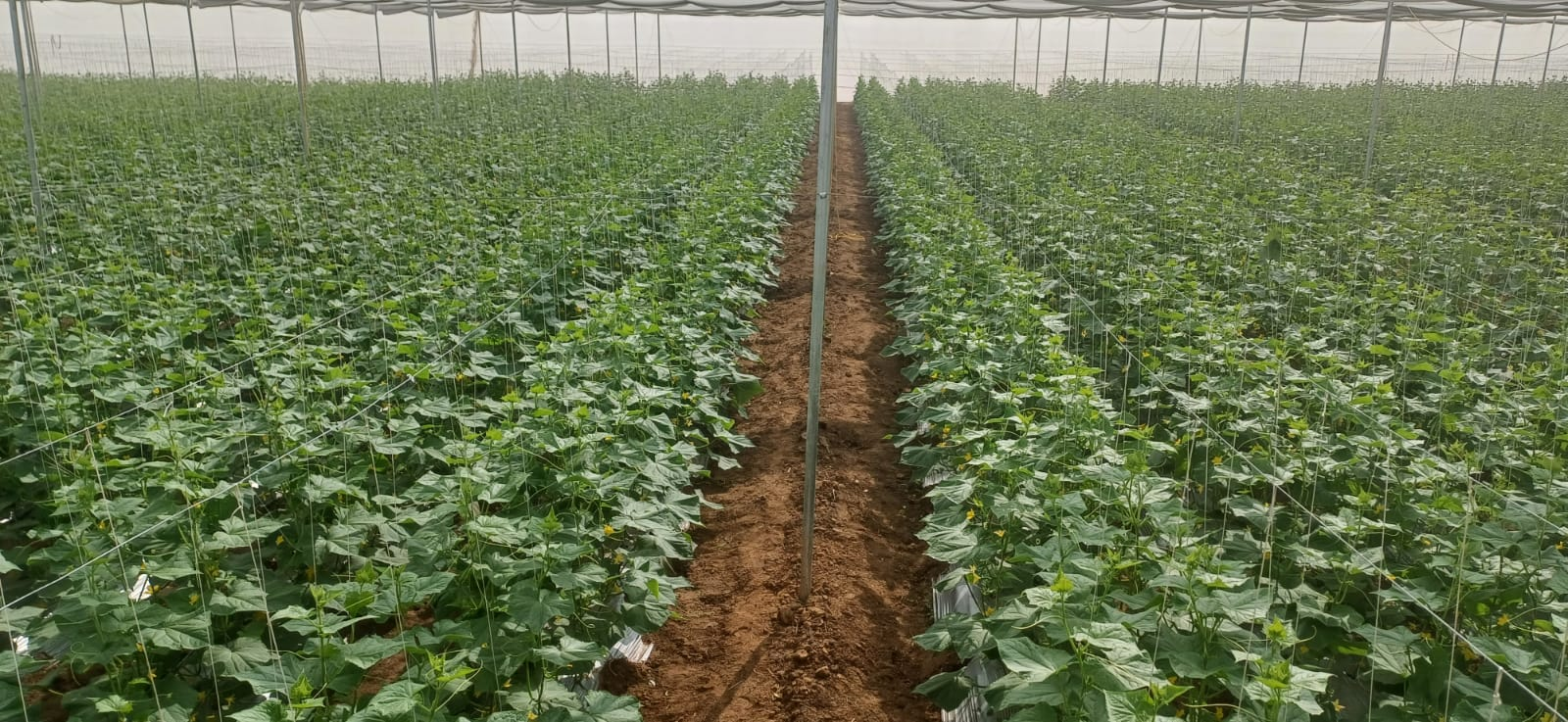
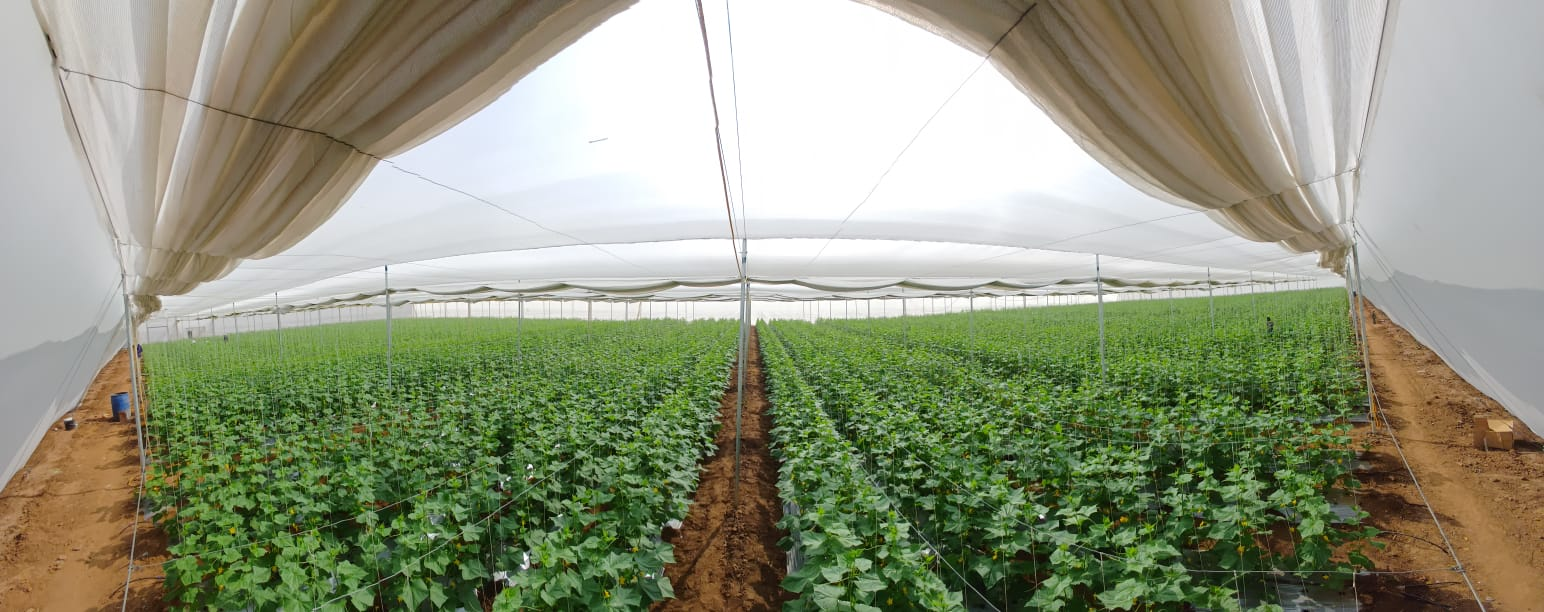
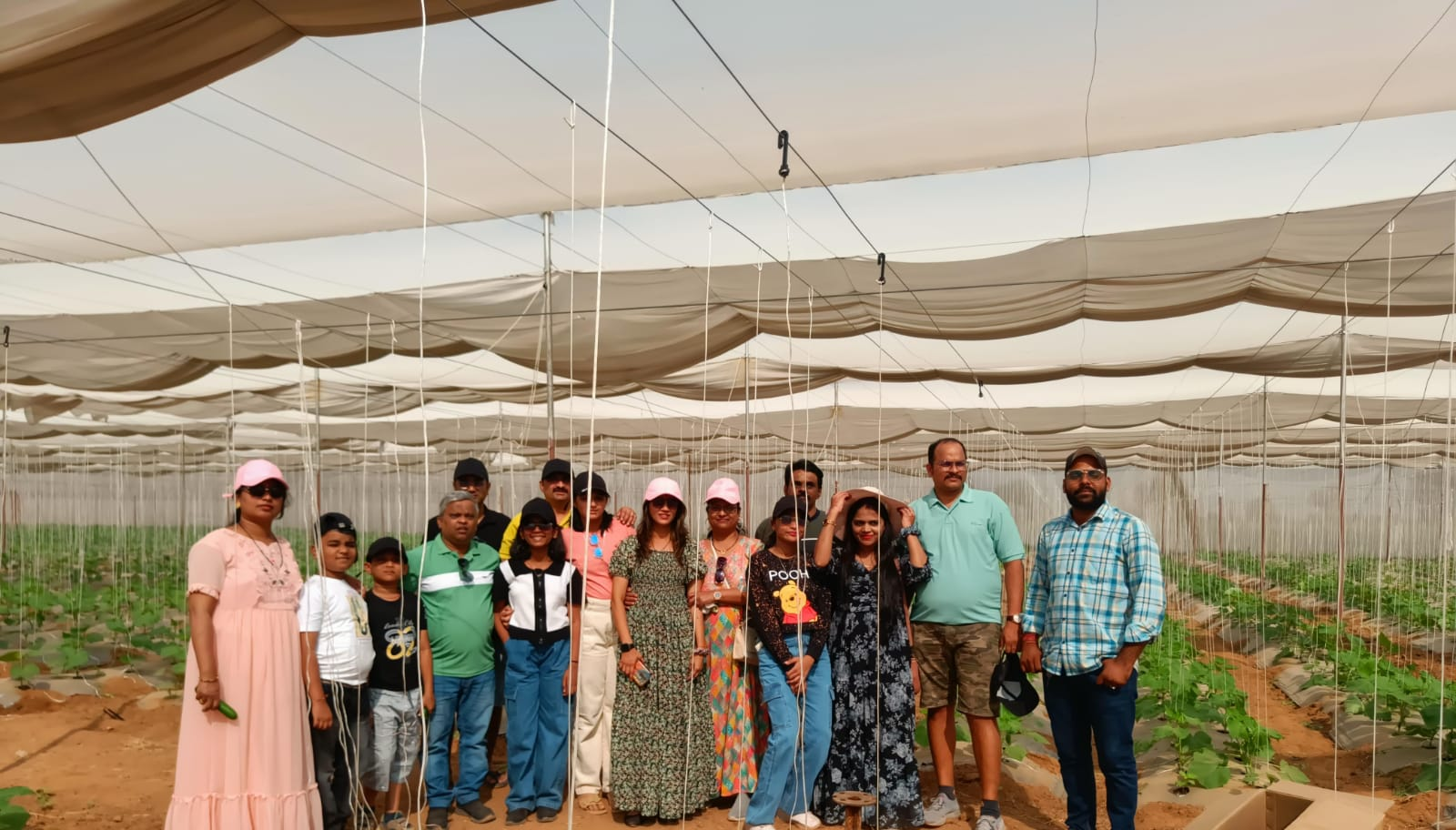
Net Poly Houses — Real Installations
From Enquiry To Installation
A straightforward, five-step process from your first enquiry to a fully installed net house structure.
Enquiry & Site Visit
Share your land size and crop plan with our team. We schedule a free on-site visit to assess soil, sunlight and wind exposure.
Design & Quotation
Based on the site visit, we recommend a structure size, shade grade and layout, and share a detailed quotation.
Fabrication
GI pipes are cut, galvanized and fabricated at our facility in Sumerpur, and netting is cut to size.
On-Site Installation
Our installation team erects the frame, fits and tensions the netting, and completes the foundation work on your site.
Handover & Support
We walk you through operation and upkeep, and remain available for after-sales support and netting replacement.
Netting on the sides keeps the structure well-ventilated and pest-free, while film on the roof protects against rain and hail — combining both gives you benefits neither material alone can provide.
Yes, film and netting have different service lives and can be replaced independently as each one wears out, without needing to replace both together.
Yes, the film-covered roof provides reliable rain protection, making this structure well-suited to regions with significant monsoon rainfall.
Cost falls between a standard net house and a full poly house, since only the roof uses film. Share your requirement for a free, customized quote.
Yes, we install net poly houses PAN India, not just within Rajasthan.
The transition point is engineered with an overlap and drip-edge detail specifically designed to shed water away from the netted walls, preventing ingress at the junction.
Yes, some configurations extend film further down the walls for additional rain protection, or use netting on the roof in drier regions — our team designs this based on your local climate.
Yes, since only the roof uses film, material and running costs are generally lower than a fully film-covered poly house of the same size.
Periodic inspection of both the roof film and side netting, with each replaced independently as it reaches the end of its service life — typically film every 3-5 years and netting on a similar cycle.
Have A Project In Mind?
Share your requirement and our team will get back to you within 24 hours with a free site consultation and a customized quote.
Send A Message
No obligation. Response within 24 hours.
More From Net House