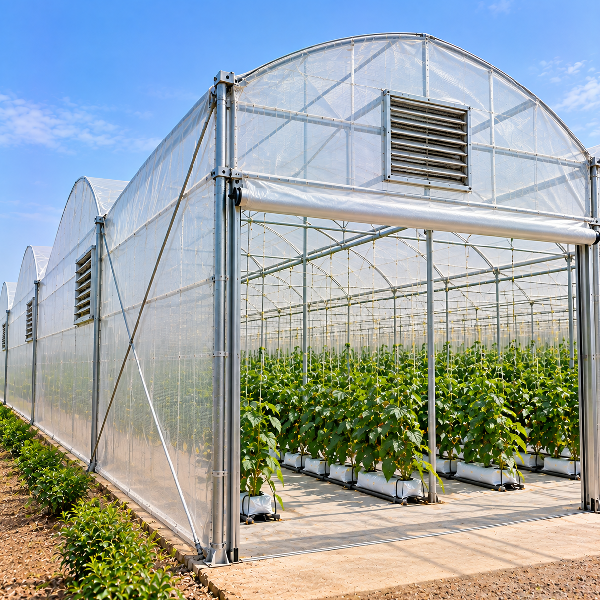
The Cost-Effective Greenhouse Covering Option
The film greenhouse structure uses multi-layer, UV-stabilized polyethylene film instead of glass or polycarbonate sheeting — delivering similar light diffusion and climate benefits at a significantly lower material and installation cost. The film is engineered to resist degradation from UV exposure while maintaining consistent light transmission for photosynthesis across its service life.
Built on a hot-dip galvanized iron frame, this structure gives growers a practical middle ground between basic poly houses and glass greenhouses — full greenhouse functionality at poly house economics. It's a popular choice for growers who want greenhouse-grade light diffusion without committing to the higher capital cost of glass or polycarbonate.
- UV-Stabilized Multi-Layer Film
- Lower Cost Than Glass/Polycarbonate
- Consistent Light Diffusion
- Replaceable Film Covering
Film Greenhouse Structure — At A Glance
Engineered around a hot-dip galvanized iron frame with multi-layer UV-stabilized film covering, sized to your plot and crop plan before fabrication begins.
Built For Cost-Effective Climate Management
Every film greenhouse from Jai Shri Irrigation balances greenhouse-grade performance with poly house economics, using multi-layer film engineered specifically for light diffusion.
Multi-Layer UV Film
Layered polyethylene film resists UV degradation while diffusing light evenly across the growing area.
Lower Material Cost
Film covering costs significantly less than glass or polycarbonate sheeting of equivalent area.
Replaceable Covering
Film can be replaced at the end of its service life without rebuilding the structural frame.
GI Pipe Frame
Hot-dip galvanized iron frame provides the same structural durability as our other greenhouse ranges.
Anti-Drip Film Treatment
Film can be specified with an anti-drip surface treatment that reduces condensation dripping onto crops, lowering disease risk.
Diffused Light Technology
Multi-layer film scatters direct sunlight into diffused light, reducing hot spots and improving light distribution to lower leaves.
Why Choose A Film Greenhouse
Greenhouse-grade growing conditions without glass or polycarbonate pricing, with a faster payback period as a result.

Lower Total Cost
Significant savings on covering material compared to glass or polycarbonate greenhouses.

Even Light Diffusion
Multi-layer film diffuses sunlight evenly, reducing leaf scorch and hot spots.

Faster Return On Investment
Lower upfront cost means a quicker payback period than glass alternatives.

Easy Long-Term Upkeep
Film replacement is simpler and cheaper than repairing glass or polycarbonate panels.

Reduced Disease Pressure
Anti-drip film treatment and even light diffusion reduce the humid microclimates that encourage fungal disease development.
Scalable Investment
Lower entry cost per square meter makes it practical to scale film greenhouse coverage in phases as your business grows.
Suited To These Growing Needs
A practical choice for growers who want greenhouse benefits at a lower entry cost, from vegetable farming to nursery production.
Vegetable Farming
Tomato, capsicum and cucumber grown under consistent, diffused light conditions.
Nursery Production
A cost-effective covered environment for large-scale seedling raising.
Budget-Conscious Commercial Farming
Growers who want greenhouse benefits without glass or polycarbonate investment.
Off-Season Cultivation
Extend the growing calendar with reliable, diffused-light protected cultivation.
Tomato & Capsicum Greenhouses
Trellised vegetable crops that benefit from diffused light and consistent climate at commercial scale.
Cut Flower Greenhouses
Flower crops needing diffused, even light for consistent stem quality and reduced sunburn on blooms.
Have A Question About This Structure?
Talk to our team directly — no forms, no waiting.
Call +91-76656 35358 Chat On WhatsAppGI Frame & Multi-Layer UV Film
The frame uses hot-dip galvanized iron (GI) pipes for long-term structural durability. The covering is a multi-layer, UV-stabilized polyethylene film, engineered for even light diffusion and a 3-5 year service life before replacement.
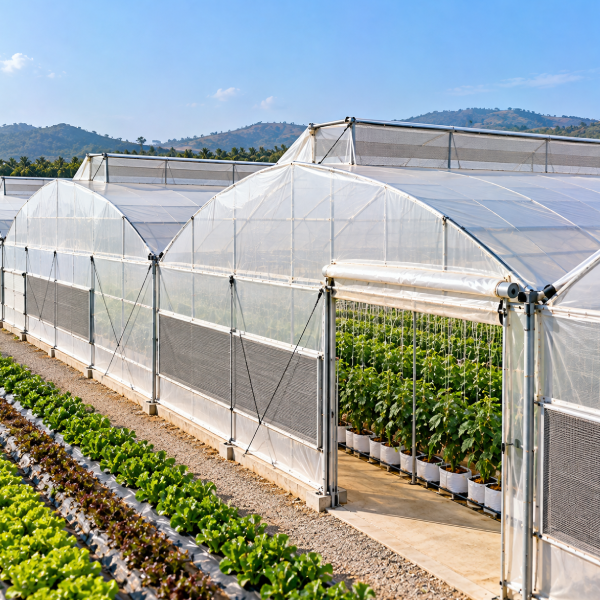
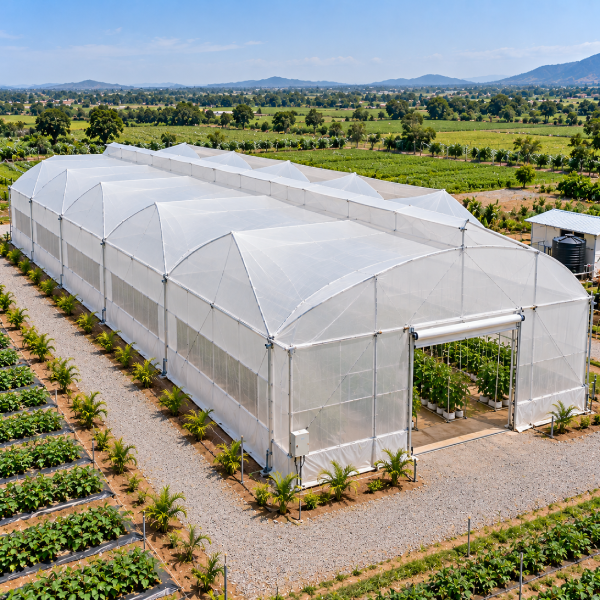
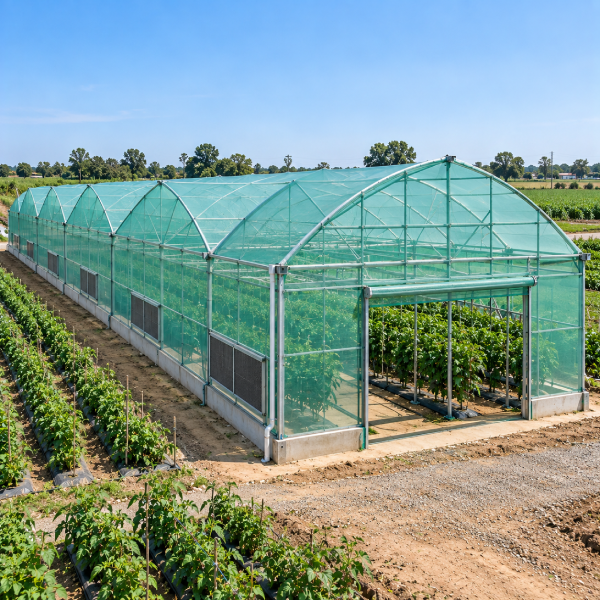
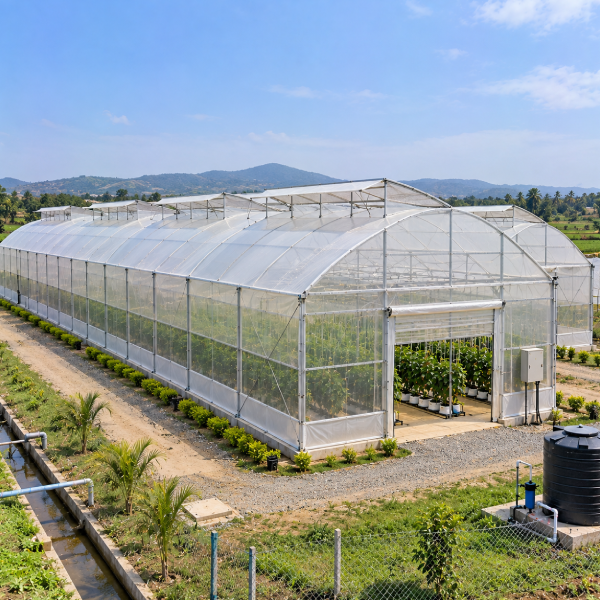
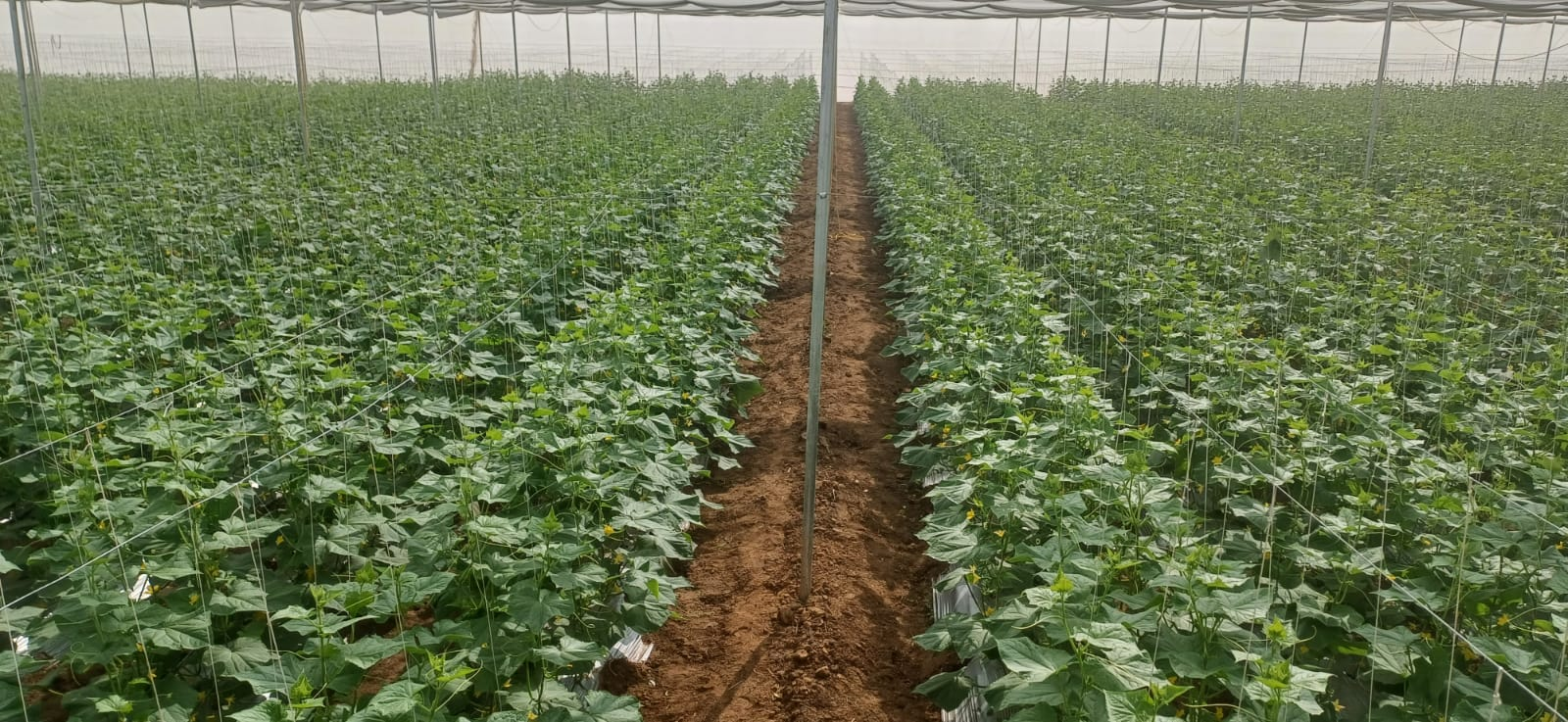
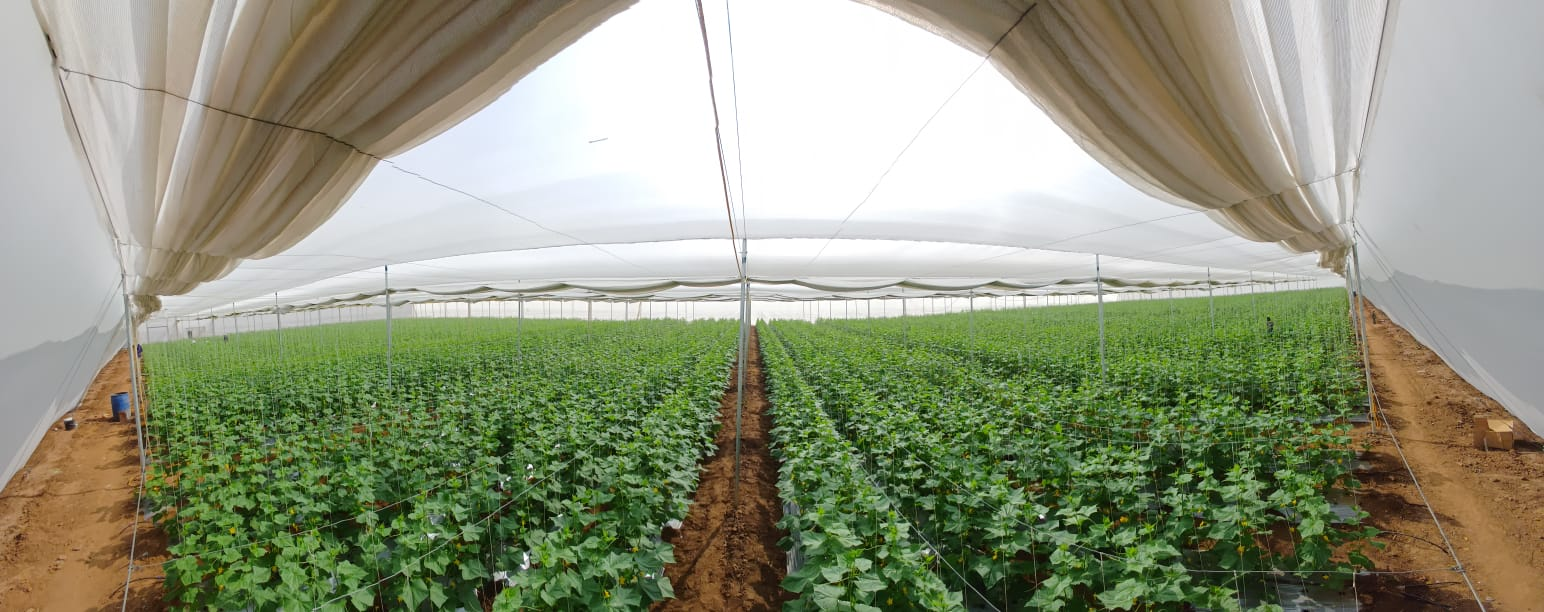
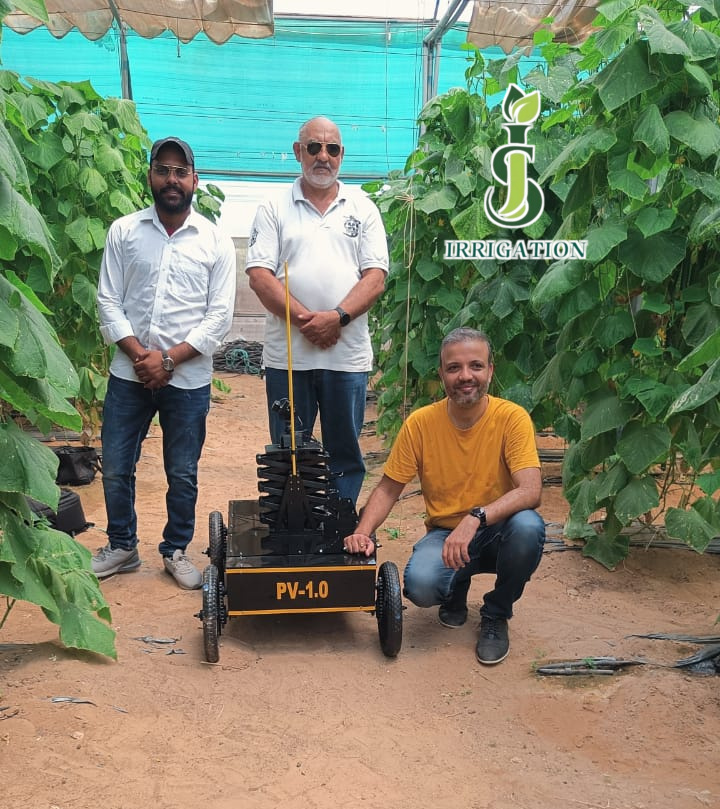
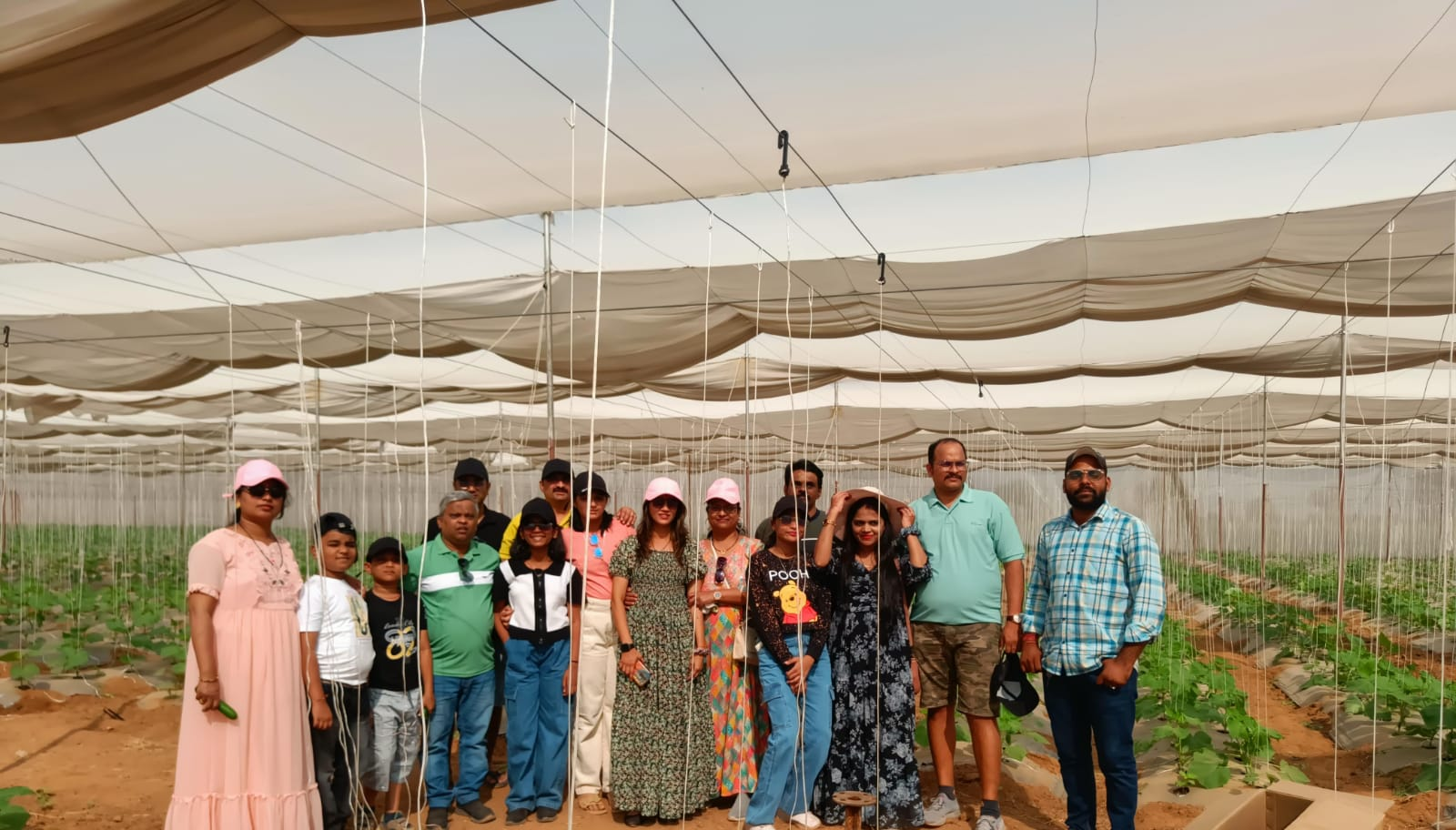
Film Greenhouse Structure — Real Installations
From Enquiry To Installation
A straightforward, five-step process from your first enquiry to a fully installed, climate-ready greenhouse.
Enquiry & Site Visit
Share your land size and crop plan with our team. We schedule a free on-site visit to assess soil, climate and utility access.
Design & Quotation
Based on the site visit, we recommend a structure size, covering and climate-system combination, with a detailed quotation.
Fabrication
Reinforced GI frames are fabricated at our Sumerpur facility, sized for the covering and systems you've chosen.
On-Site Installation
Our team erects the frame, fits the covering, and installs any fogging, misting or fan-pad systems on your site.
Handover & Support
We walk you through operating the structure and its systems, and remain available for after-sales support.
A film greenhouse uses UV-stabilized polyethylene film instead of glass or polycarbonate sheeting, delivering similar light diffusion and climate benefits at a significantly lower material and installation cost.
UV-stabilized film typically lasts 3-5 years depending on grade and exposure, and can be replaced without rebuilding the structural frame.
The GI frame offers the same structural durability as glass or polycarbonate greenhouses — only the covering material differs, and film is designed to withstand UV exposure and weather for its full service life.
Vegetables like tomato, capsicum and cucumber, along with nursery and seedling crops, all do well under the diffused light a film greenhouse provides.
Film greenhouses are generally more affordable than glass or polycarbonate greenhouses of the same size. Share your requirement for a free, customized quote.
Yes, we install film greenhouse structures PAN India, not just within Rajasthan.
Diffused light is direct sunlight scattered evenly across the growing area rather than concentrated in hot spots — it reduces leaf scorch, improves light reach to lower leaves, and supports more uniform crop growth.
Anti-drip treatment adds a modest cost premium but often pays for itself through reduced disease pressure — our team can advise whether it makes sense for your specific crop and climate.
Film greenhouses cost significantly less upfront than polycarbonate structures, though film needs replacement every 3-5 years while polycarbonate can last 10+ years — the right choice depends on your investment horizon.
It’s possible if the frame was engineered to support the heavier polycarbonate load, but it’s more cost-effective to decide on covering material during initial design — let our team know if you might upgrade later.
Have A Project In Mind?
Share your requirement and our team will get back to you within 24 hours with a free site consultation and a customized quote.
Send A Message
No obligation. Response within 24 hours.
More From Agricultural Greenhouses