A Multi-Peak Roofline For Better Airflow
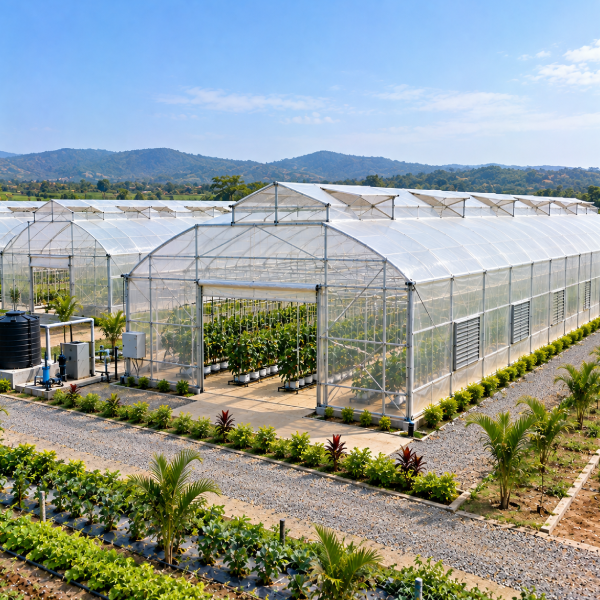
"Corn crown" describes a roof profile with repeating peaks across each span — resembling rows of corn kernels from a distance — rather than a single continuous ridge line. Each peak creates its own ventilation opening, improving natural airflow distribution across wide, multi-span structures where a single ridge would leave the center poorly ventilated.
The repeating peak-and-valley design also improves rainwater runoff by creating more drainage channels across the roof surface, reducing water pooling compared to flatter multi-span roof designs. This profile is particularly valuable for large commercial installations spanning many joined bays, where ventilation and drainage performance become harder to achieve with simpler roof geometries.
- Multi-Peak Roof Profile
- Distributed Ventilation Openings
- Improved Rainwater Drainage
- Suited To Wide Multi-Span Layouts
Corn Crown Protected Cultivation — At A Glance
Engineered around a repeating multi-peak roof profile for improved ventilation and drainage across wide spans.
Built Around A Repeating Peak Design
Every corn crown structure is engineered to make the most of its distinctive multi-peak roofline, using it to solve the ventilation and drainage challenges that come with very wide, multi-span layouts.
Multi-Peak Roof Profile
Repeating peaks create multiple ventilation points across each span.
Distributed Airflow
Ventilation openings at each peak improve airflow distribution across wide structures.
Improved Drainage
Multiple peak-and-valley channels reduce water pooling compared to flatter roofs.
GI Pipe Frame
A hot-dip galvanized iron frame shaped to the repeating peak profile.
Independent Peak Ventilation Control
Each roof peak can have its own ventilation opening control, allowing fine-tuned airflow management across different zones of a large structure.
Scalable To Any Number Of Spans
The repeating peak design scales consistently whether you're joining 3 spans or 10, maintaining ventilation performance at any scale.
Why Choose A Corn Crown Profile
Better ventilation and drainage performance for wide, multi-span commercial structures, where simpler roof designs would fall short.

Better Ventilation At Width
Distributed peak vents outperform a single ridge line across very wide multi-span layouts.

Reduced Water Pooling
Multiple drainage channels handle rainfall more effectively than flatter designs.

Suited To Large Commercial Scale
The profile performs well even as structures scale to many joined spans.

Proven Roof Design
A well-established profile used in large-scale protected cultivation globally.
Reduced Hot Spots At Scale
Distributed peak ventilation prevents the heat build-up that a single ridge line would create in the center of a very wide structure.

Lower Structural Water Load
Improved drainage reduces the roof water load during heavy rainfall, an important structural consideration for large-span roofs.
Suited To These Needs
Best suited to wide, multi-span commercial structures needing distributed ventilation and reliable drainage across a large footprint.
Large Commercial Farms
Wide multi-span operations where a single ridge line wouldn't ventilate evenly.
High-Rainfall Regions
Areas where improved roof drainage is a meaningful structural advantage.
Export-Scale Production
Large operations needing reliable, evenly-distributed growing conditions.
Multi-Span Vegetable Production
Commercial vegetable farms operating across several joined spans.
Very Large Multi-Span Commercial Farms
Operations spanning many joined bays where uniform ventilation across the full width is critical to consistent crop performance.
High-Rainfall Region Commercial Projects
Large commercial installations in regions where roof drainage performance is a significant structural design factor.
Have A Question About This Structure?
Talk to our team directly — no forms, no waiting.
Call +91-76656 35358 Chat On WhatsAppGI Frame Shaped To The Corn Crown Profile
The frame uses hot-dip galvanized iron (GI) pipe shaped into the repeating corn crown multi-peak profile, covered with UV-stabilized polyethylene film.
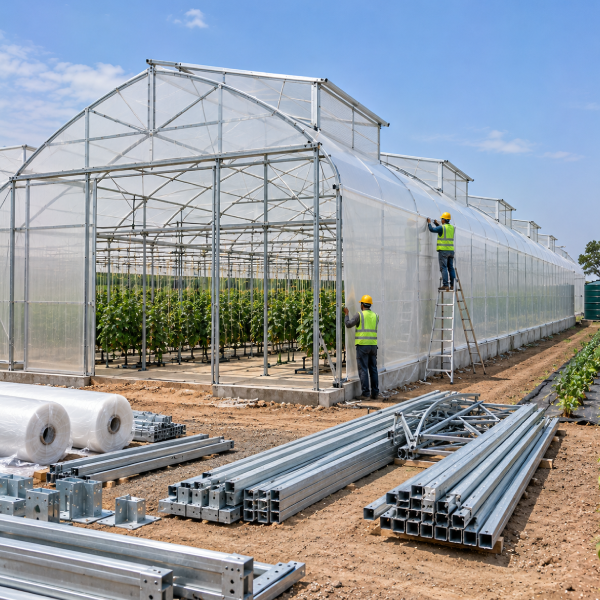
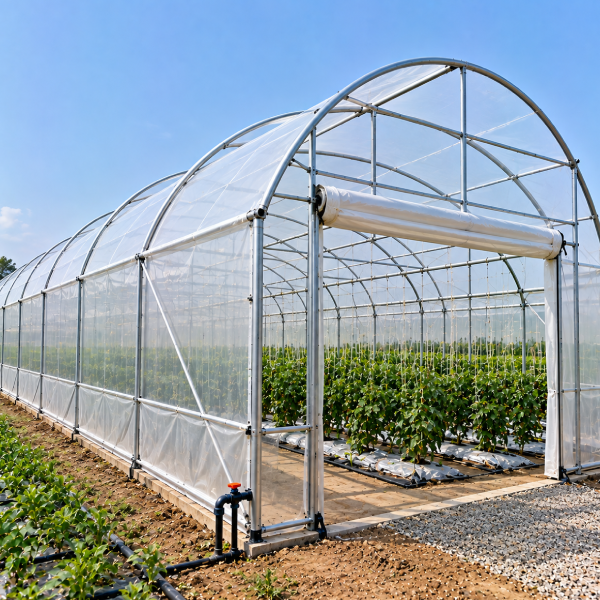
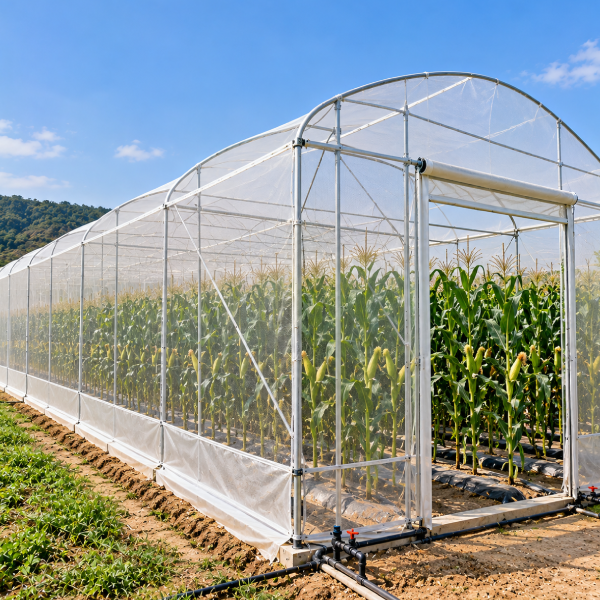
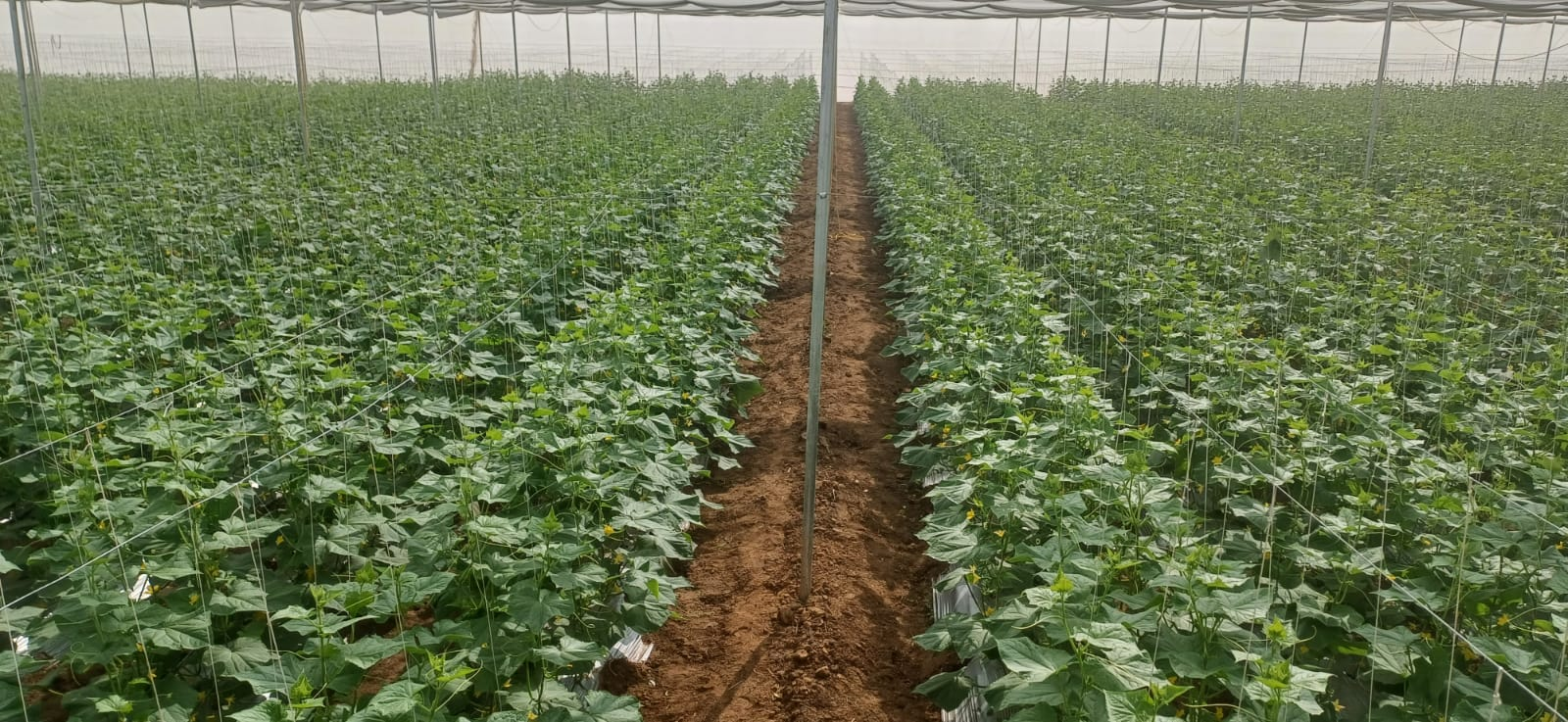
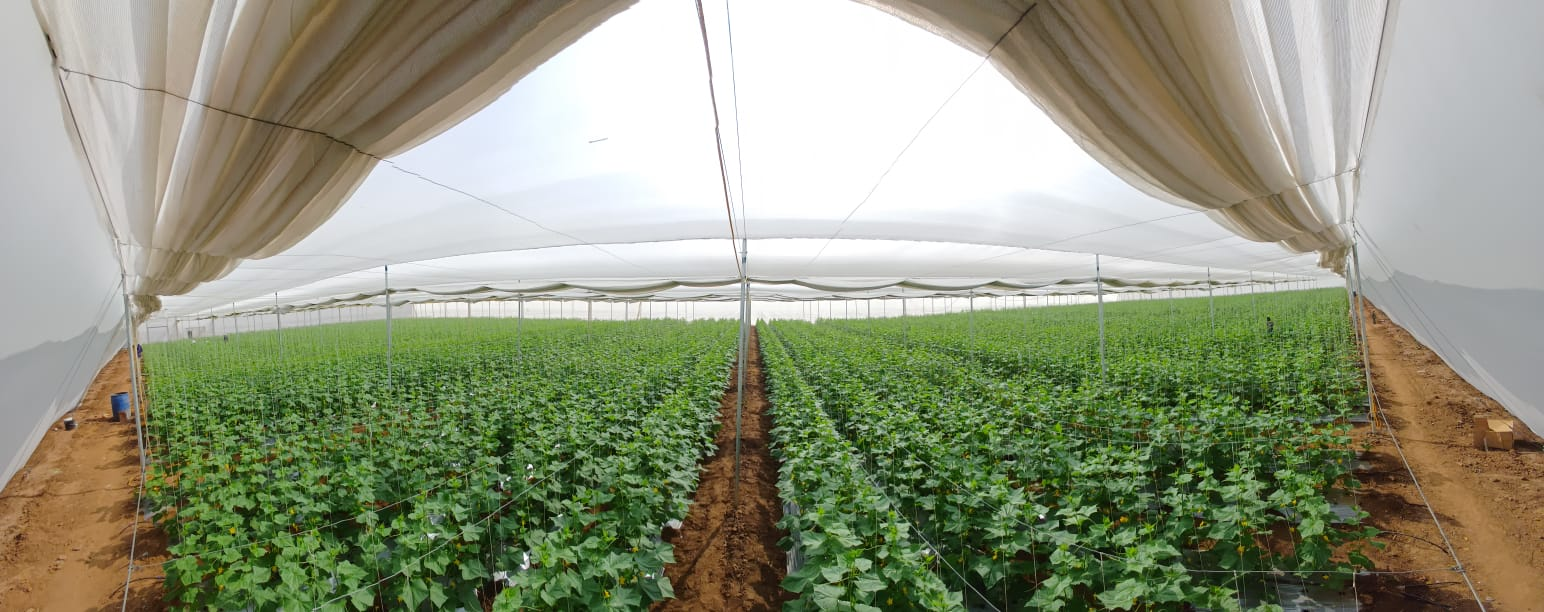
Corn Crown Protected Cultivation — Real Installations


From Enquiry To Installation
A straightforward, five-step process from your first enquiry to a fully assembled structural frame.
Enquiry & Site Visit
Share your land size and structural requirement with our team. We schedule a free on-site visit to assess soil and layout.
Design & Quotation
Based on the site visit, we recommend a frame profile and span configuration, with a detailed engineering-backed quotation.
Fabrication
The frame is fabricated at our Sumerpur facility to the exact structural specification, ready for on-site assembly.
On-Site Assembly
Our team erects and bolts the frame on your prepared foundation, checking alignment across every span.
Handover & Support
We hand over the completed frame with structural documentation, and remain available for after-sales support.
It refers to a roof profile with repeating peaks across each span, resembling rows of corn kernels, rather than one continuous ridge — each peak creates its own ventilation opening.
For very wide, multi-span structures, the corn crown profile can offer better distributed ventilation and drainage. For smaller or single-span structures, a standard gothic roof is often simpler and equally effective.
The design scales well across multiple joined spans — our team can advise on the right configuration for your specific plot size.
Cost depends on total covered area and number of spans. Share your requirement for a free, customized quote.
Yes, we install corn crown protected cultivation structures PAN India, not just within Rajasthan.
A single ridge vent across many joined spans can leave the center poorly ventilated, since hot air has further to travel to escape — the corn crown’s distributed peaks solve this by giving each span its own ventilation point.
Yes, larger commercial installations often use motorized systems to control peak ventilation openings automatically based on internal temperature readings.
The repeating peak frame requires more fabrication work per span than a simple ridge design, but this is typically offset by the ventilation and drainage performance gained at scale.
Corn crown designs typically show their advantage from around 4-5 joined spans onward — for smaller structures, a standard gothic or ridge roof is often simpler and equally effective.
Have A Project In Mind?
Share your requirement and our team will get back to you within 24 hours with a free site consultation and a customized quote.
Send A Message
No obligation. Response within 24 hours.
More From Greenhouse Structures