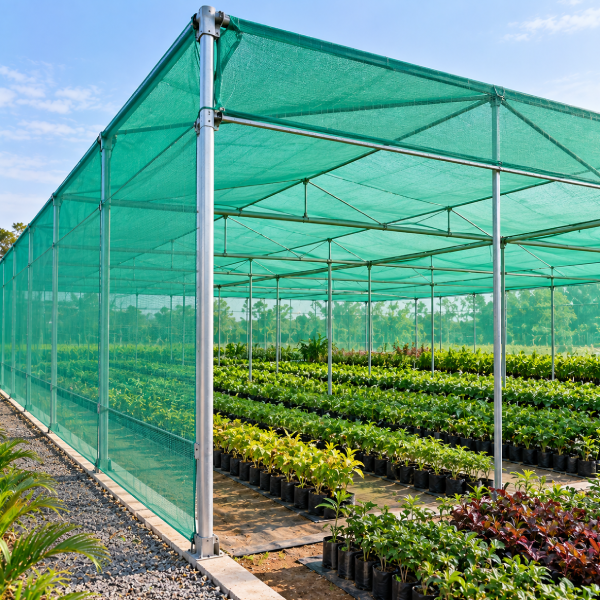
Moderated Light For Shade-Loving Crops
A shade net house uses woven shade netting instead of insect mesh or plastic film, cutting sunlight intensity by a chosen percentage — typically between 35% and 75% depending on the crop. This reduces heat stress and leaf scorch for crops that don't thrive under full, direct sunlight, while keeping the structure open and breathable.
Built on a hot-dip galvanized iron frame, the shade net house also offers some protection from hail and strong wind, while keeping the growing area open to natural airflow and rainfall. It's one of the most cost-effective ways to moderate growing conditions for shade-sensitive crops without the expense of full climate control.
- Adjustable Shade Percentage
- Reduces Heat Stress
- Hail & Wind Protection
- Natural Airflow Maintained
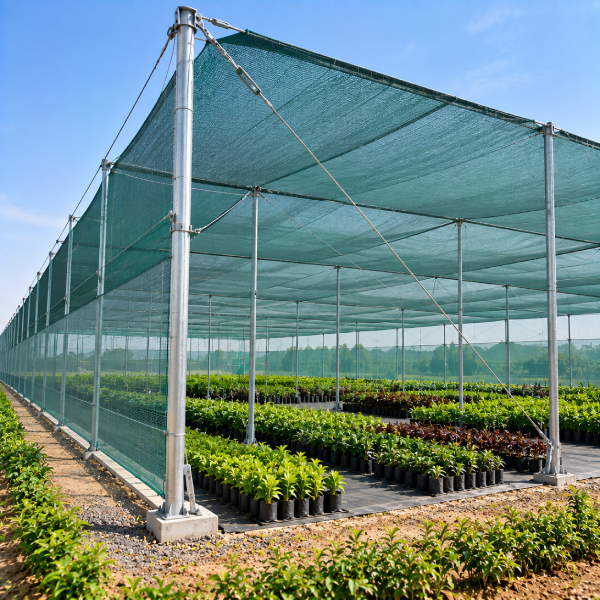
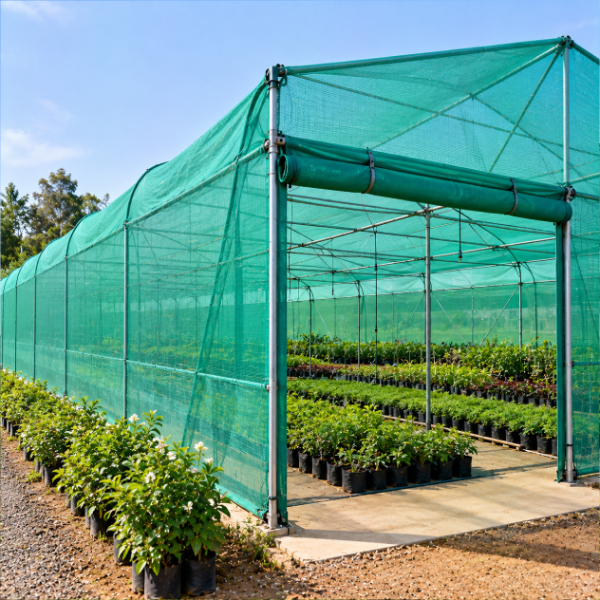
Shade Net House — Structure At A Glance
Engineered around a hot-dip galvanized iron frame with woven shade netting, sized to your plot and crop plan before fabrication begins.
Built To Moderate Light, Not Block It
Every shade net house from Jai Shri Irrigation is engineered to reduce heat stress while keeping the growing area open and breathable, using UV-stabilized netting sized to your specific crop.
Adjustable Shade Factor
Netting is available in 35% to 75% shade factor, chosen based on your specific crop.
Hail Protection
The netting layer softens hail impact, reducing crop damage during storms.
Full Natural Ventilation
An open-mesh design allows continuous airflow, avoiding heat build-up.
GI Pipe Frame
Hot-dip galvanized iron frame resists corrosion and supports the netting for years.
Multiple Shade Percentage Options
Netting is available in 35%, 50% and 75% shade factors, matched to your specific crop's light tolerance during the design stage.
Reinforced Edge Stitching
Netting edges are reinforced to resist tearing and fraying under wind load, extending the covering's working life.
Why Farmers Choose A Shade Net House
A simple, affordable way to protect shade-sensitive crops from harsh sun and hail, without the ongoing cost of climate-control systems.

Low Setup & Running Cost
Shade netting costs less than UV film, with no ongoing power costs.

Reduced Heat Stress
Lower light intensity reduces leaf scorch and heat stress on sensitive crops.

Storm Protection
Netting reduces hail and heavy-wind damage compared to open-field cultivation.

Better Nursery Survival Rates
Moderated light conditions improve seedling survival and growth consistency.

Reduced Water Loss
Lower light intensity reduces evaporation from soil and plant surfaces, modestly reducing irrigation frequency compared to open-field growing.

Simple Maintenance
Shade netting requires minimal upkeep beyond periodic tension checks, unlike film covering which needs more careful handling.
Suited To These Growing Needs
Best suited to shade-loving crops and nursery operations that need moderated sunlight across Rajasthan and PAN India.
Nursery Plants
Young seedlings and saplings that need protection from direct, intense sunlight.
Ornamental Plants
Shade-loving ornamental and foliage plants grown for retail or landscaping.
Spice & Medicinal Crops
Certain spice and medicinal plants that thrive under partial shade conditions.
Hardening Of Tissue-Culture Plants
A transition environment for tissue-culture plants before open-field planting.
Orchid & Foliage Plant Production
Shade-loving ornamental plants grown commercially for retail and landscaping markets.
Betel Leaf & Spice Cultivation
Traditional shade-requiring crops that have long depended on constructed shade structures across Rajasthan.
Have A Question About This Structure?
Talk to our team directly — no forms, no waiting.
Call +91-76656 35358 Chat On WhatsAppGI Frame & Woven Shade Netting
The structural frame uses hot-dip galvanized iron (GI) pipes for long-term durability. The covering is woven HDPE shade netting, available in a range of shade factors from 35% to 75% depending on your crop’s light requirements.
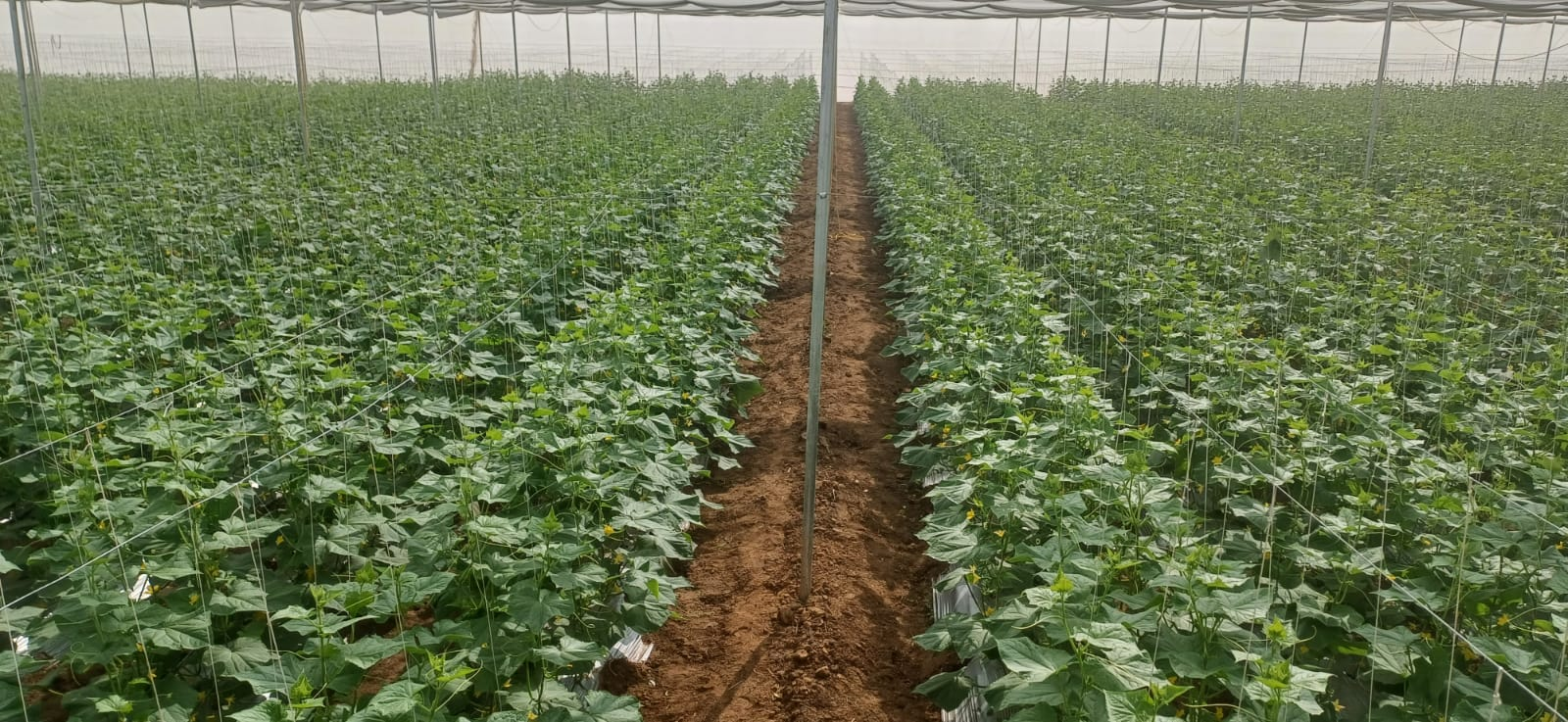
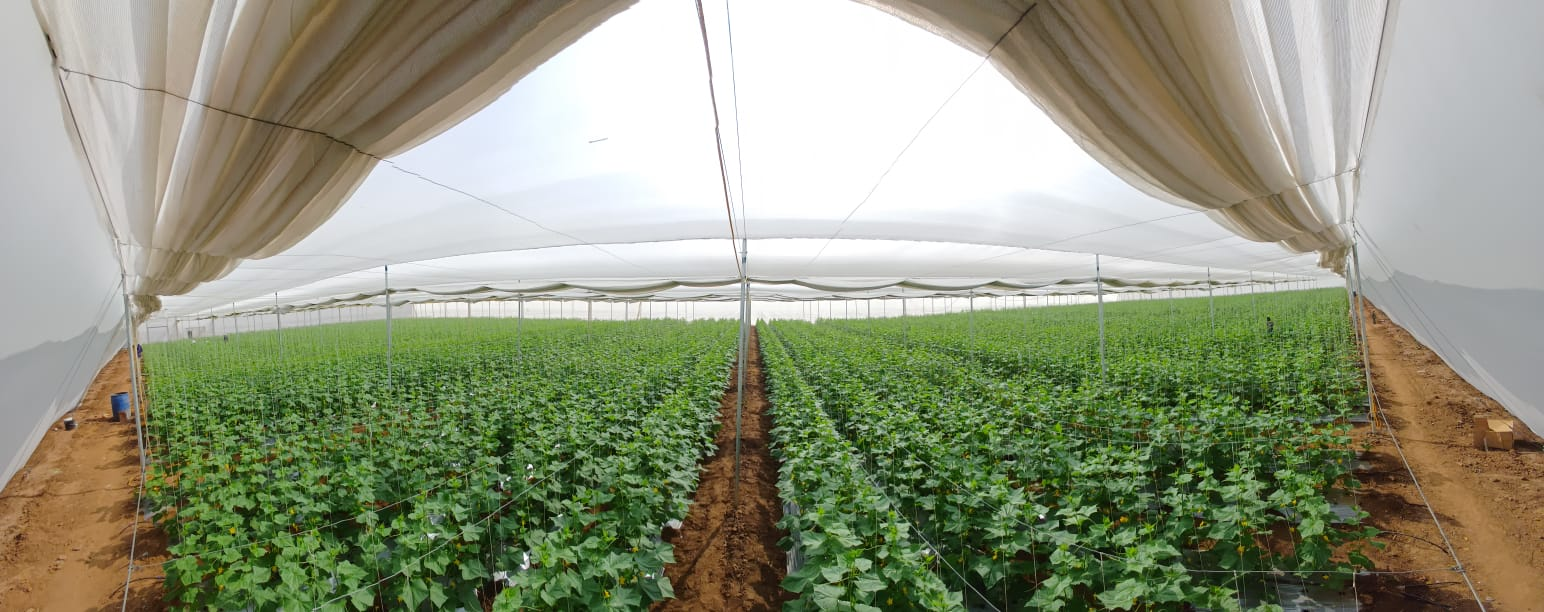
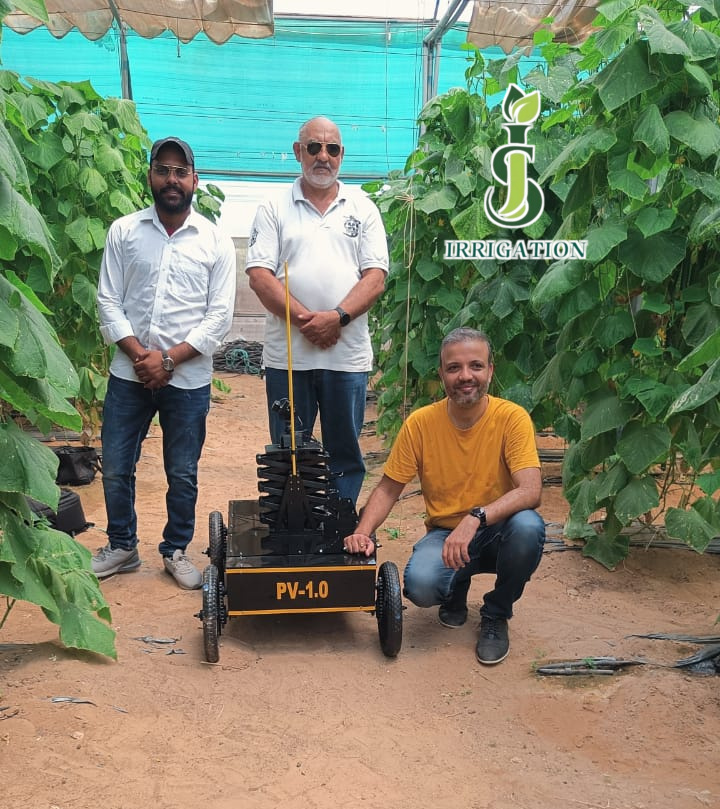
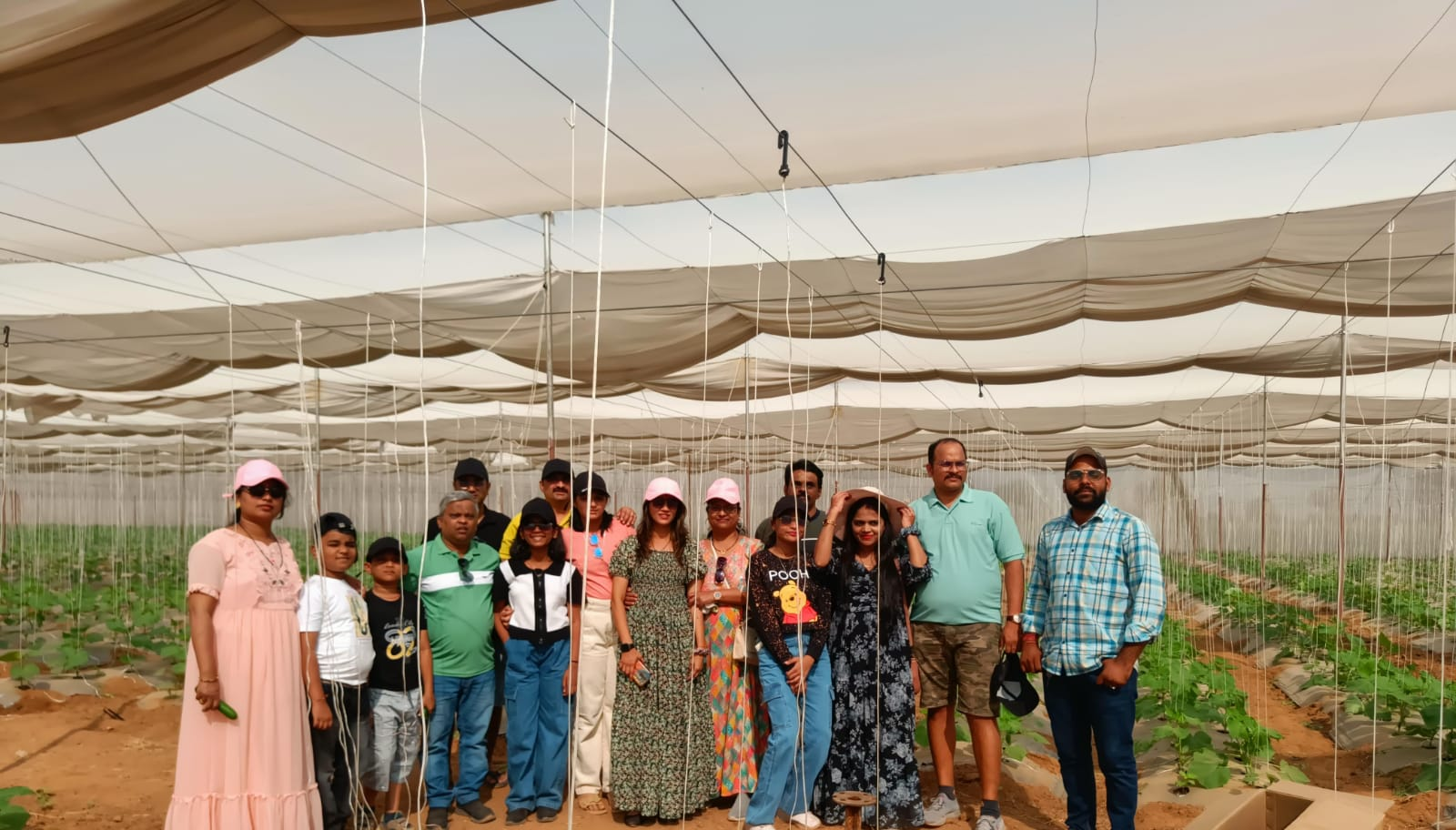
Shade Net House — Real Installations
From Enquiry To Installation
A straightforward, five-step process from your first enquiry to a fully installed net house structure.
Enquiry & Site Visit
Share your land size and crop plan with our team. We schedule a free on-site visit to assess soil, sunlight and wind exposure.
Design & Quotation
Based on the site visit, we recommend a structure size, shade grade and layout, and share a detailed quotation.
Fabrication
GI pipes are cut, galvanized and fabricated at our facility in Sumerpur, and netting is cut to size.
On-Site Installation
Our installation team erects the frame, fits and tensions the netting, and completes the foundation work on your site.
Handover & Support
We walk you through operation and upkeep, and remain available for after-sales support and netting replacement.
Shade percentage depends on your specific crop’s light tolerance — nursery and foliage plants often need 50-75% shade, while some vegetable and spice crops do well with 35-50%. Our team can recommend the right percentage.
Shade netting allows rain to pass through, so it offers moderate rather than full rain protection. It’s designed primarily for light and heat moderation, not weatherproofing.
A shade net house uses woven shade netting to reduce light intensity, while a regular net house uses fine insect-proof mesh primarily for pest exclusion. Some structures combine both functions.
Shade net houses are generally affordable compared to poly houses and greenhouses, since netting costs less than film. Share your requirement for a free, customized quote.
UV-stabilized shade netting typically lasts 3-5 years depending on grade and exposure, similar to poly house film, and can be replaced without rebuilding the frame.
Yes, we install shade net houses PAN India, not just within Rajasthan.
Yes, shade net houses are commonly fitted with drip irrigation systems — our team can plan the irrigation layout as part of your structure design or as a retrofit.
Netting allows wind to pass through more than solid film, reducing wind load on the frame, though very high winds can still stress netting edges — reinforced stitching helps mitigate this.
Yes, netting can be replaced with a different shade percentage if your crop plan changes, without needing to rebuild the frame.
There’s no strict minimum — shade net houses scale from small nursery-sized structures to large commercial spans, sized to your specific plot.
Have A Project In Mind?
Share your requirement and our team will get back to you within 24 hours with a free site consultation and a customized quote.
Send A Message
No obligation. Response within 24 hours.
More From Net House