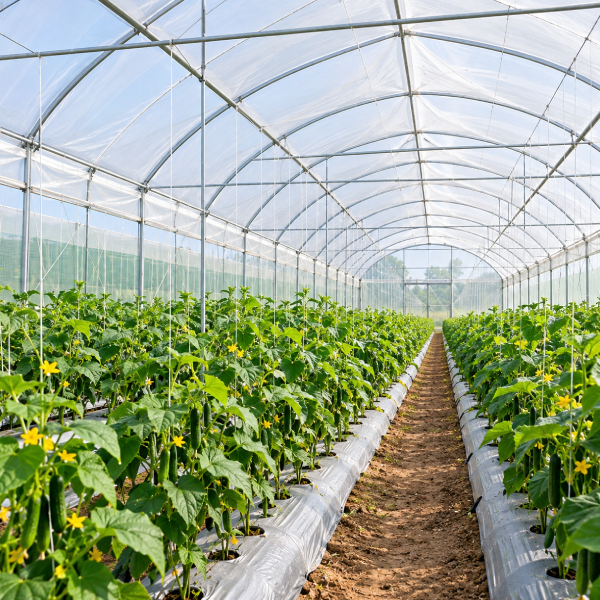
Precise Climate Control For High-Value Crops
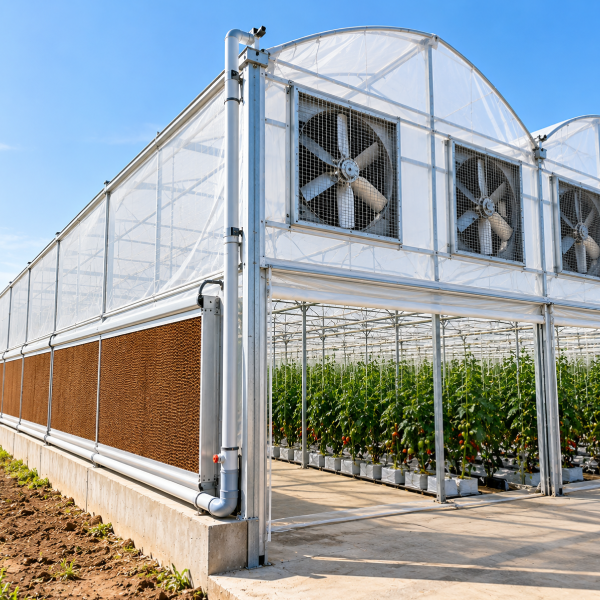
The fan & pad controlled poly house uses exhaust fans at one end and cellulose cooling pads at the other to draw air through the structure, cooling it through evaporation as it passes. This active system holds internal temperature and humidity far more precisely than passive ventilation, which matters for heat-sensitive or high-value crops that can't tolerate Rajasthan's peak summer temperatures.
Built on a reinforced GI frame with insulated end walls to support the fan-pad airflow, this structure suits commercial growers who need consistent, controllable conditions regardless of outside heat — particularly in Rajasthan's hotter months. The investment in active cooling typically pays off through higher-value crop options and more consistent year-round production.
- Evaporative Cooling System
- Consistent Internal Temperature
- Ideal For High-Value Crops
- Thermostat-Controlled Fans
Fan & Pad Controlled Poly House — Structure At A Glance
Engineered around a reinforced GI frame with an integrated fan-and-pad evaporative cooling system, sized to your plot and crop plan before fabrication begins.
Built For Active Climate Control
Every fan & pad controlled poly house from Jai Shri Irrigation is engineered to hold precise internal conditions, even through peak summer heat.
Exhaust Fan System
High-capacity exhaust fans draw air continuously through the structure for consistent cooling.
Cellulose Cooling Pads
Evaporative cooling pads reduce incoming air temperature as it enters the structure.
Thermostat Control
Automated thermostats switch fans on and off to maintain your target temperature range.
Insulated End Walls
End walls are sealed to maintain effective airflow direction and cooling efficiency.
Variable-Speed Fan Control
Exhaust fans can run at variable speeds matched to cooling demand, rather than simple on-off operation, improving energy efficiency.
Pad Wetting System
An automated water circulation system keeps cooling pads consistently wet for reliable evaporative cooling performance.
Why Growers Choose Fan & Pad Cooling
Active climate control that opens the door to high-value crops in climates where natural ventilation falls short.

Higher Yield Potential
Consistent temperatures reduce crop stress, supporting higher and more predictable yields.

Grow Heat-Sensitive Crops
Maintain conditions suited to crops that would otherwise struggle in Rajasthan's summer heat.

Year-Round Production
Active cooling extends reliable production across more months of the year.

Export-Quality Output
Precise conditions support the consistency needed for export-grade vegetables and flowers.

Precise Temperature Targeting
Thermostat-controlled operation lets you maintain a specific target temperature range rather than accepting whatever passive ventilation achieves.

Extends Viable Growing Window
Active cooling extends the months of the year you can reliably grow heat-sensitive crops, compared to relying on natural ventilation alone.
Suited To These Growing Needs
Best suited to growers who need precise, controllable conditions rather than passive protection alone.
High-Value Vegetable Crops
Capsicum, cucumber and export-quality vegetables that need consistent temperatures.
Floriculture
Cut flowers and ornamental plants that are sensitive to temperature swings.
Hot-Climate Regions
Areas where summer heat makes natural ventilation alone insufficient.
Commercial-Scale Production
Growers scaling up who need predictable, controllable growing conditions.
Summer Cut-Flower Production
Flower crops that would otherwise suffer quality loss during Rajasthan's peak summer heat.
Year-Round Export Vegetable Contracts
Growers under supply contracts requiring consistent year-round production regardless of season.
Have A Question About This Structure?
Talk to our team directly — no forms, no waiting.
Call +91-76656 35358 Chat On WhatsAppGI Frame & Evaporative Cooling System
The frame uses reinforced hot-dip galvanized iron (GI) pipes sized to support the added airflow load of the fan-pad system. Cooling pads are made from cellulose material engineered for efficient evaporative cooling, paired with UV-stabilized polyethylene film covering for the structure itself.
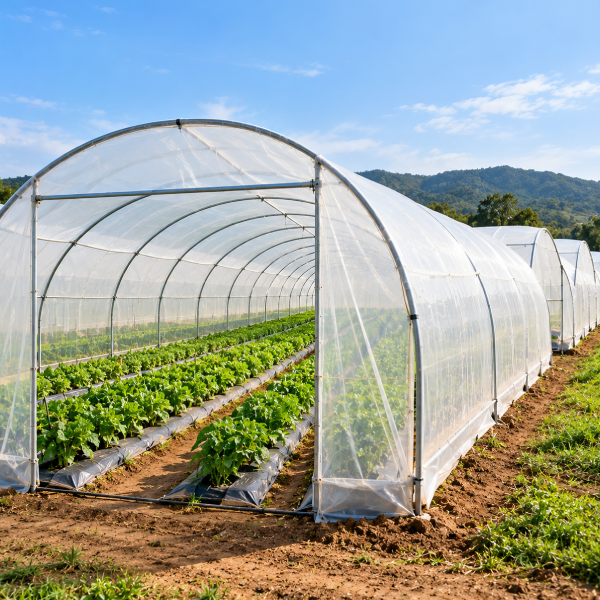
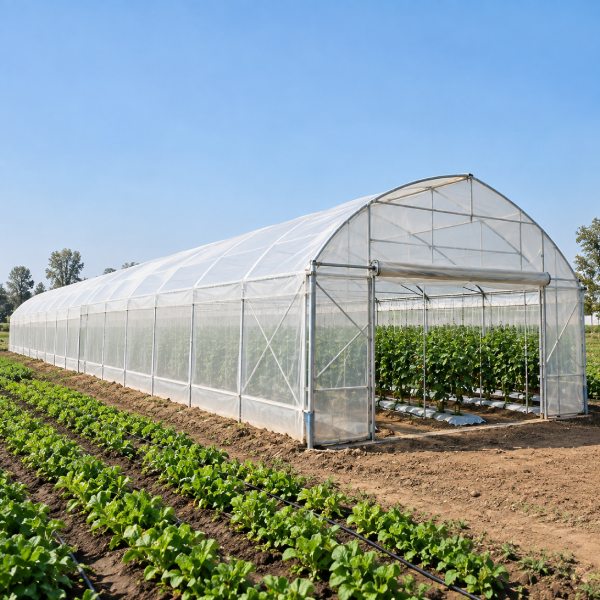
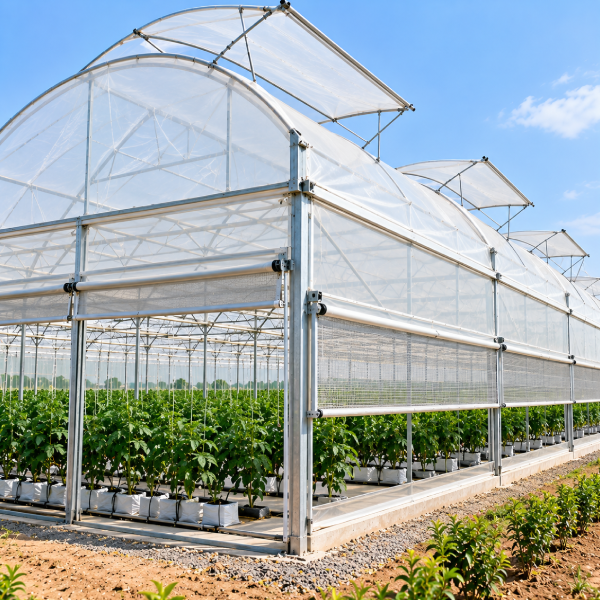
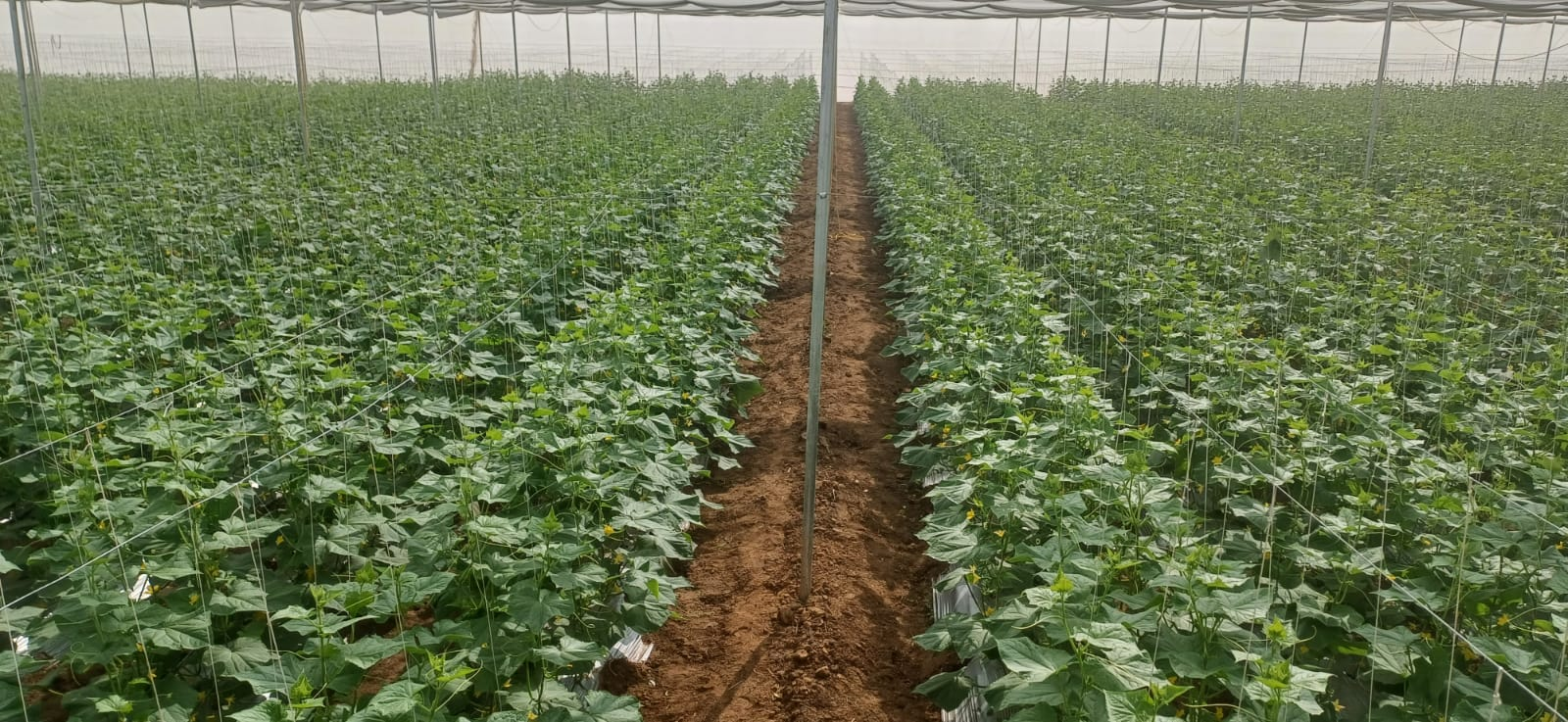
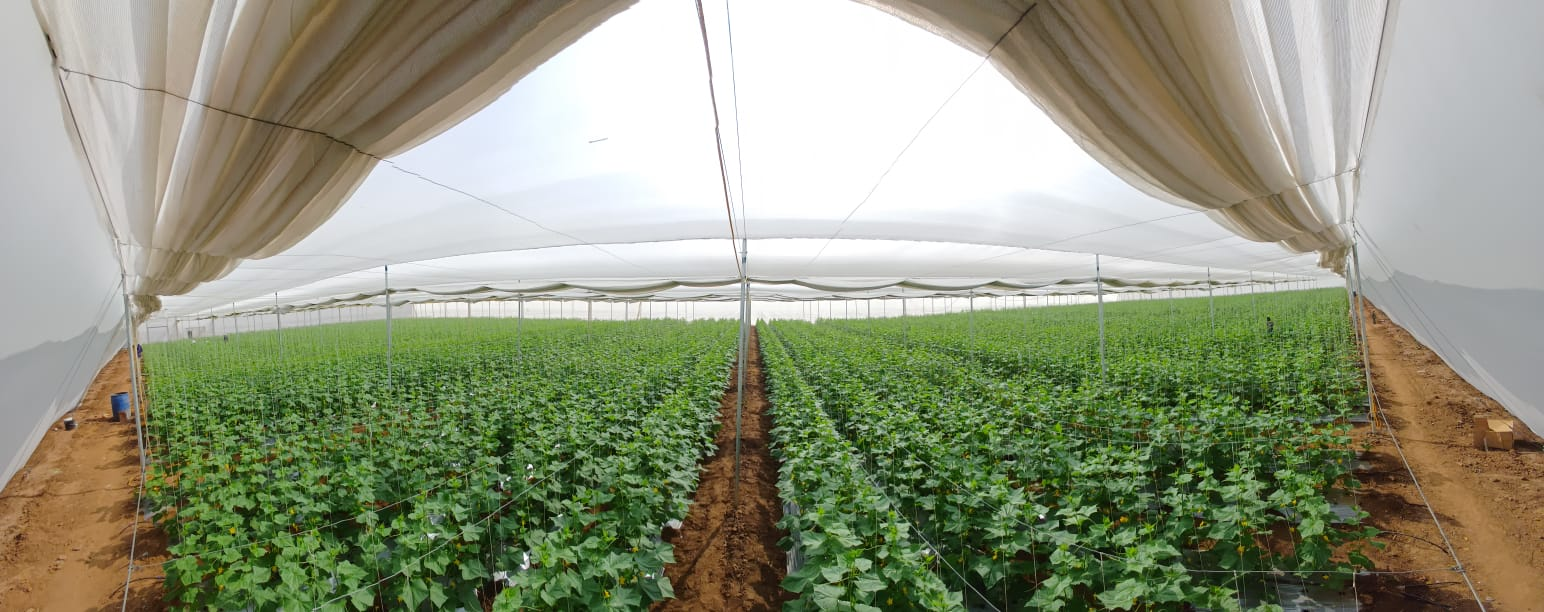
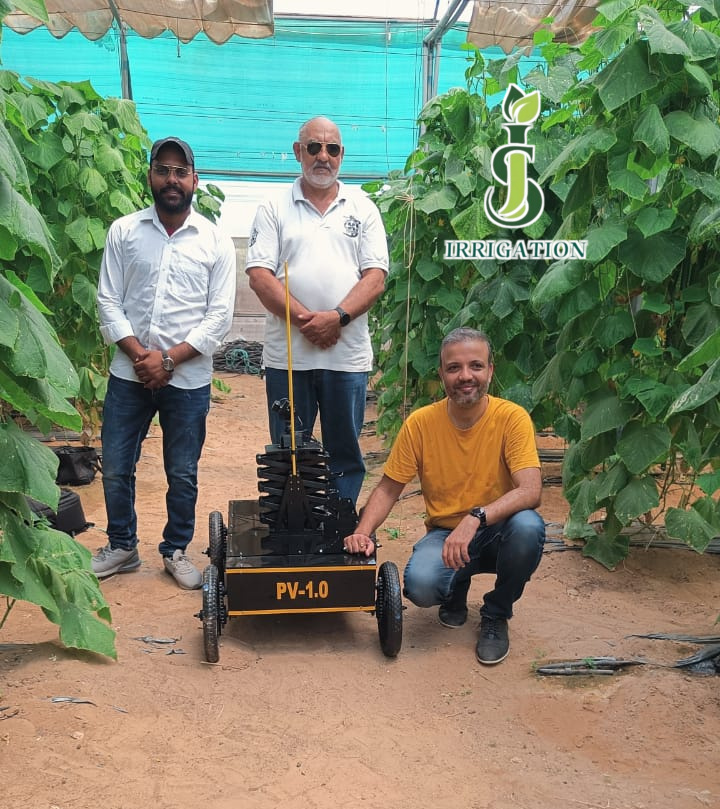
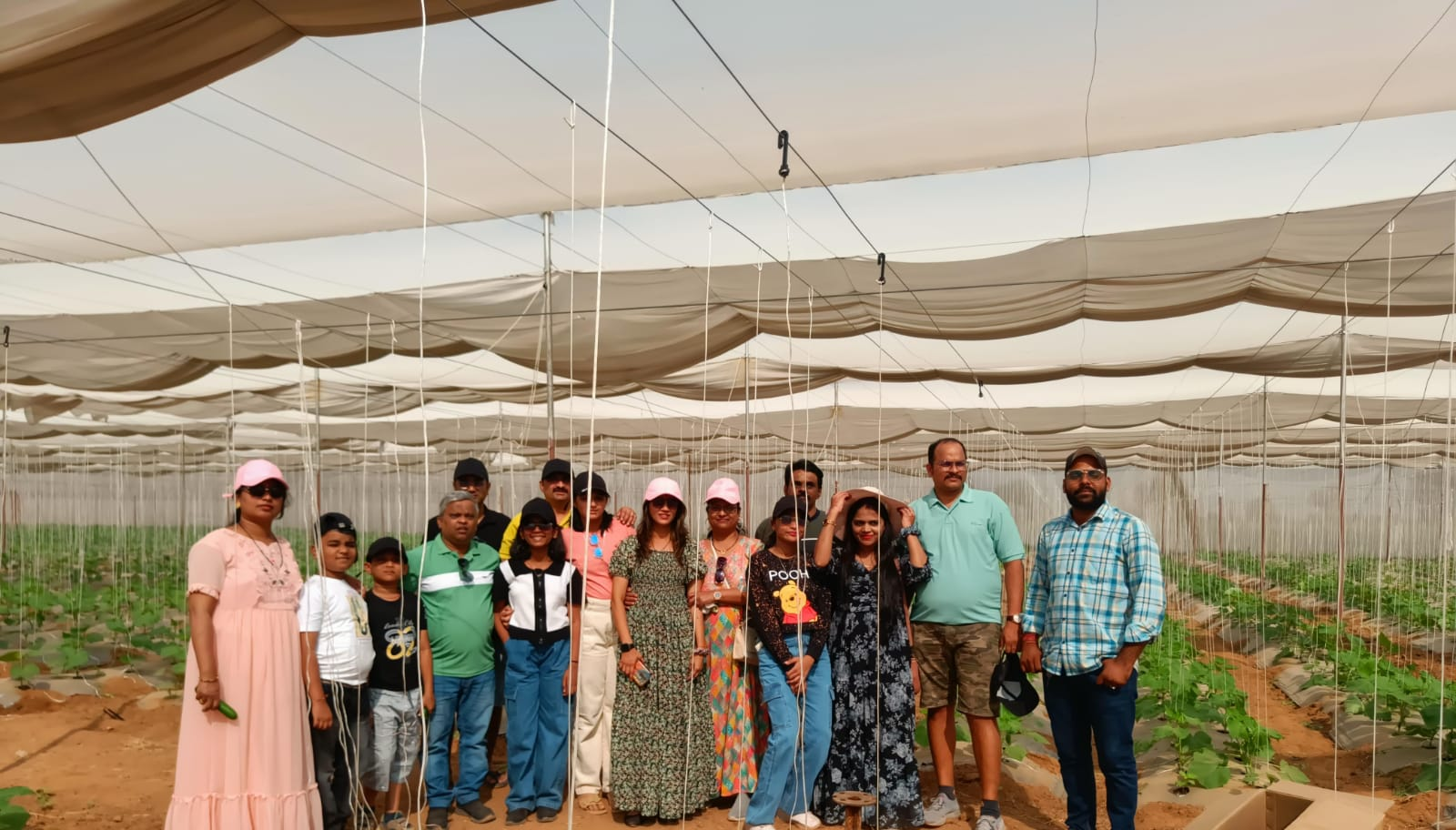
Fan & Pad Controlled Poly House — Real Installations
From Enquiry To Installation
A straightforward, five-step process from your first enquiry to a fully installed, farm-ready polyhouse structure.
Enquiry & Site Visit
Share your land size and crop plan with our team. We schedule a free on-site visit to assess soil, sunlight and wind exposure.
Design & Quotation
Based on the site visit, we recommend a structure size and layout, and share a detailed quotation with material specifications.
Fabrication
GI pipes are cut, galvanized and fabricated at our facility in Sumerpur to the exact structure dimensions.
On-Site Installation
Our installation team erects the frame, fits the UV-stabilized film and curtains, and completes the foundation work on your site.
Handover & Support
We walk you through operation and maintenance, and remain available for after-sales support and film replacement.
Exhaust fans at one end pull air through cellulose cooling pads at the other end. As air passes through the wet pads, it cools through evaporation before entering the growing area, maintaining a lower, more consistent internal temperature.
Yes, the fan-pad cooling system adds to both setup and running cost compared to a naturally ventilated structure, but it delivers much more precise climate control, which pays off for high-value or heat-sensitive crops.
Power usage depends on structure size and how many hours the fans run. Our team can estimate typical running costs based on your specific structure size and local climate during the quotation process.
Heat-sensitive vegetables like capsicum and cucumber, cut flowers, and export-quality produce that need consistent temperatures benefit the most from active cooling.
Yes, since cooling depends on running fans. We can advise on backup power options if your site has an unreliable electricity supply.
Fan & pad controlled poly houses typically take 4-6 weeks from site survey to handover, including installation of the cooling system, depending on structure size.
Yes, our team remains available for maintenance and cooling-pad replacement support even after project handover.
Yes, several central and state schemes offer subsidies on poly house construction, including climate-controlled structures. Our team can guide you through eligibility for your region.
Fans running at variable speeds matched to actual cooling demand use less power than fans cycling on and off at full speed, reducing your electricity costs over the growing season.
Cellulose cooling pads typically last several years with proper maintenance, though replacement frequency depends on water quality and usage intensity — our team can advise based on your specific conditions.
Yes, thermostat-controlled operation lets you set a target temperature range, with fans and pads automatically adjusting to maintain it rather than just providing general cooling.
Reasonably clean water free of excessive mineral content works best, since heavy mineral deposits can reduce pad efficiency over time — our team can advise on water treatment if your source needs it.
Have A Project In Mind?
Share your requirement and our team will get back to you within 24 hours with a free site consultation and a customized quote.
Send A Message
No obligation. Response within 24 hours.
More From Poly House